
Freeze-Dried and Raw Pet Food Packaging: The Highest-Barrier Job in the Aisle
Freeze-dried and raw pet food is some of the most valuable food in the store, and some of the most fragile. Strip out the moisture and you get a light, nutrient-dense food that also goes stale fast the moment air or humidity reaches it. This guide covers how to package it so it stays fresh and intact: the high-barrier films these foods demand, why reseal and sometimes an oxygen absorber matter, how to keep delicate pieces from crushing, and how to show off a premium product on the shelf.
Overview
Freeze-dried and raw pet food is some of the most valuable food in the store, and some of the most fragile. The whole point of freeze-drying is to pull the moisture out so the food stays shelf stable and keeps its nutrition, but that same dryness is exactly what makes it vulnerable. Let a little air or humidity back in and the food softens, loses its crunch, and starts to go off. For these products, the bag is not a wrapper around the food. It is part of the shelf life.
This guide covers freeze-dried and raw pet food packaging in plain language. We will look at why these foods are the hardest to package, why barrier is the whole game, how to keep air out after the bag is opened, how to protect delicate pieces, and how to make a premium product look premium on the shelf.
Why Freeze-Dried and Raw Are the Hardest Foods to Package
A bag of kibble is forgiving. Freeze-dried and raw food is not, because the very things that make it special also make it delicate.
- Moisture is the enemy, since the food was dried on purpose and even a little humidity undoes that work and invites spoilage.
- Oxygen slowly steals freshness and turns the natural fats in meat-heavy food rancid.
- The pieces are light and brittle, so nuggets and chunks crush easily if the bag lets them tumble and press.
- The product is expensive, so a package that fails is a costly loss, not a minor one.
Start from those pressures, and every packaging choice points in the same direction: protect hard, and protect everywhere.
Barrier Is the Whole Game
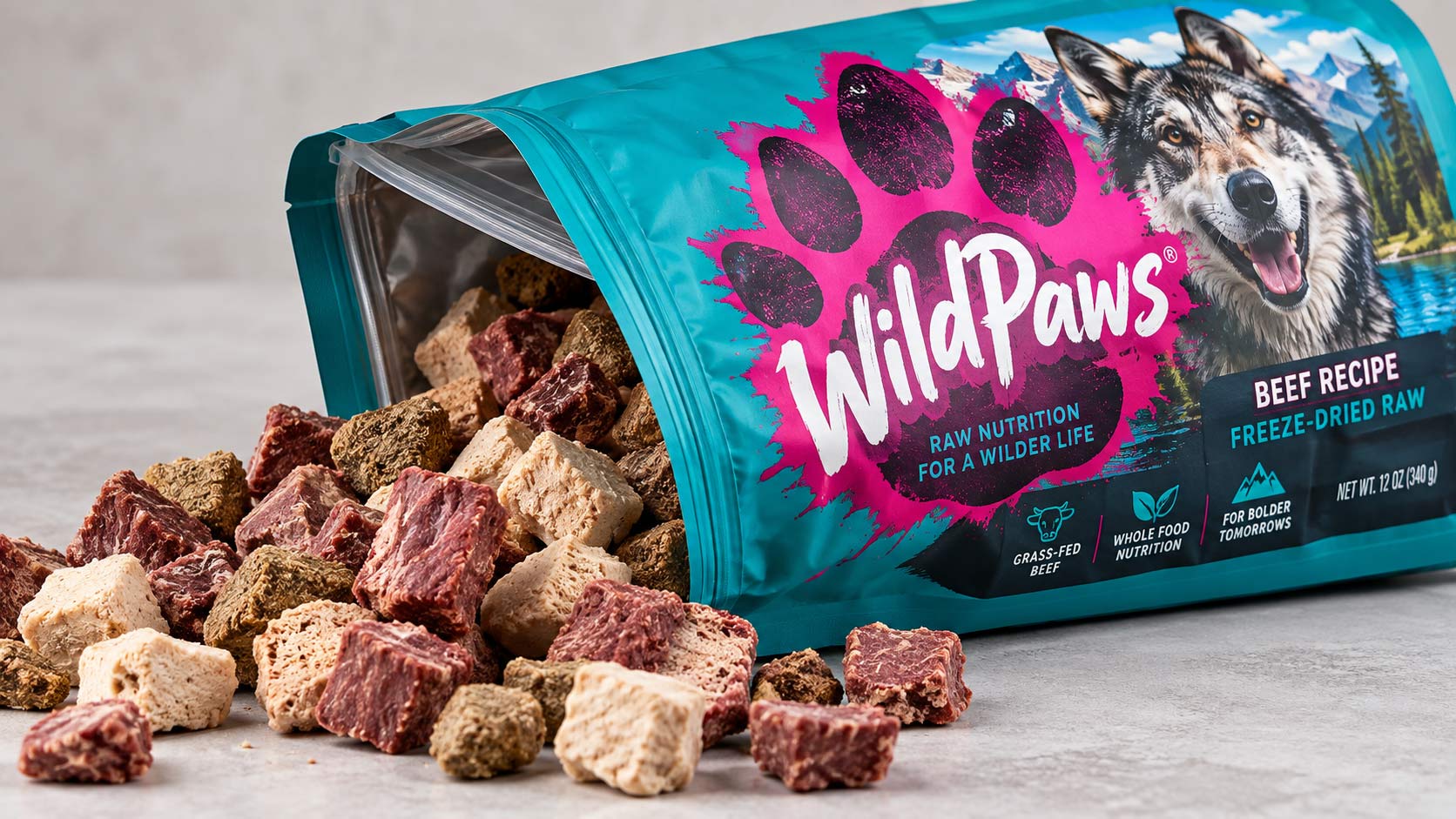
Barrier is the bag's ability to block oxygen, moisture, and light, and for freeze-dried and raw food it is the single most important thing the package does. A thin, low-barrier bag will let air creep through the walls even when it is sealed, and the food will fade long before its date. A high-barrier film, often with a foil or metallized layer, keeps the inside dry and airless so the food stays crunchy and fresh from the first serving to the last.
This is where our raw and freeze-dried packaging is built for the job, with the high-barrier construction these foods need rather than a general-purpose bag borrowed from the dry-food shelf.
Keep Air Out After the Bag Is Opened
A sealed bag protects the food until the moment a customer opens it. After that, the closure takes over, and with freeze-dried and raw food it matters more than almost anywhere else.
- A strong resealable zipper lets the customer push the air out and close the bag tight after every serving.
- Some products ship with a small oxygen absorber inside, a little packet that mops up the oxygen sealed in with the food.
- A degassing valve is worth asking about for foods that keep releasing a little gas, though most freeze-dried food does not need one.
The goal is simple. Every time the bag is opened, as little air as possible gets to stay with the food, so the last serving is as good as the first.
Protect the Delicate Pieces
Freeze-dried nuggets, chunks, and whole pieces are light and brittle, and a bag that lets them rattle around turns a premium product into a bag of crumbs.
- Give the food a sturdy bag with enough structure that the pieces are not crushed under their own weight in a stack.
- Do not overfill, since a jammed bag puts pressure on the pieces and a little headspace lets them settle gently.
- A flat-bottom or stand-up bag holds its shape and keeps the contents from shifting into a corner.
When you spec custom pet food bags for freeze-dried food, filling the real product into the real bag before you commit shows you how the pieces travel and settle.
Show Off a Premium Product
Freeze-dried and raw food sits at the top of the aisle on price, and the package has to earn that spot. Shoppers paying a premium want to see what they are getting.
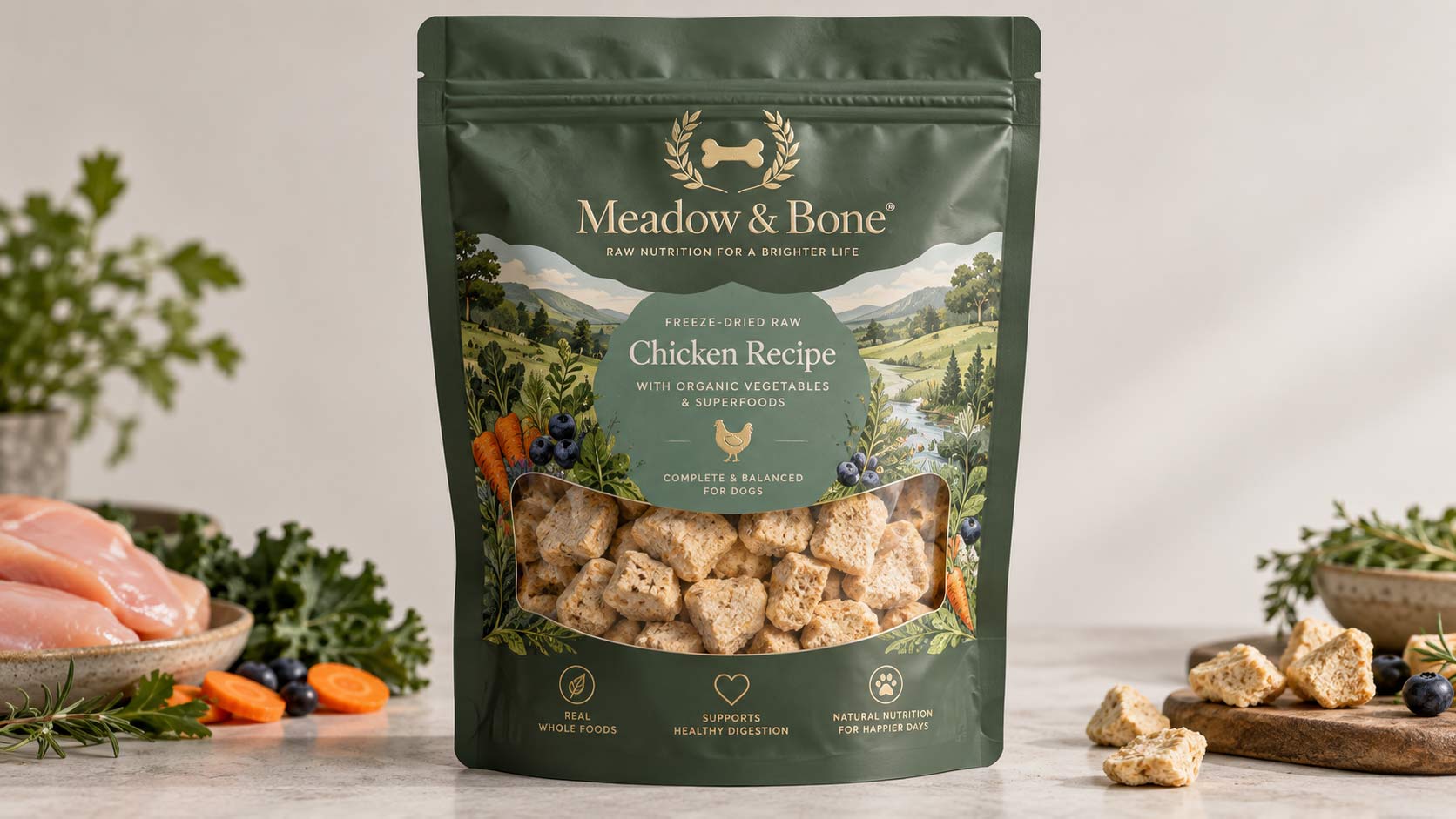
- A clear or frosted window lets the real nuggets show, which builds trust for a food that looks different from kibble.
- A matte or soft-touch finish makes the bag feel as premium as the price tag.
- Clean, honest callouts about sourcing and ingredients belong front and center, since this buyer reads the bag.
Sizes and Formats
Freeze-dried and raw food sells in more sizes than most pet food, from single-serve toppers to full meals, and the format should follow the use.
- Small resealable pouches suit toppers, freeze-dried treats, and trial sizes that get used a little at a time.
- Larger stand-up or flat-bottom bags work for full meals and multi-week supplies.
- Single-serve packets are perfect for samples and travel, and they need no reseal since they are used in one go.
Full color on a small run is easy with digital printing, so a new brand can launch a premium line without a huge first order. Whatever the size, the barrier and the closure do not change. The food is just as fragile in a small bag as a large one.
Wrapping It Up: Protect the Premium
Freeze-dried and raw pet food gives your customer a light, clean, nutrient-dense food, and it hands you the hardest packaging job in the aisle. Lead with a high barrier, back it with a closure that keeps air out after opening, protect the delicate pieces, and let a window show off what is inside. Do that, and the package keeps a premium food as fresh and whole as the day it left your line, which is exactly what a premium price has to deliver.
Ready to Create Packaging Your Pets (and Customers) Will Love?
Let's bring your brand to life.
Get Started Today