

Side GussetThe classic tall dry food shape, efficient on material and roomy for larger kibble.
Kibble is heavy, abrasive, and full of fat. It is one of the hardest products a flexible bag can be asked to hold. We build dry food bags that keep the food fresh, survive the trip, and still look sharp on the shelf.

A bag of kibble asks more of its packaging than almost anything else on a pet store shelf. The food is dense, so the bag carries real load. It is coated in fat, so the oils want to work their way into the material. It is aromatic, which is exactly what attracts pests. And it gets opened and closed every single day for weeks. Every choice on this page exists to answer one of those four problems.
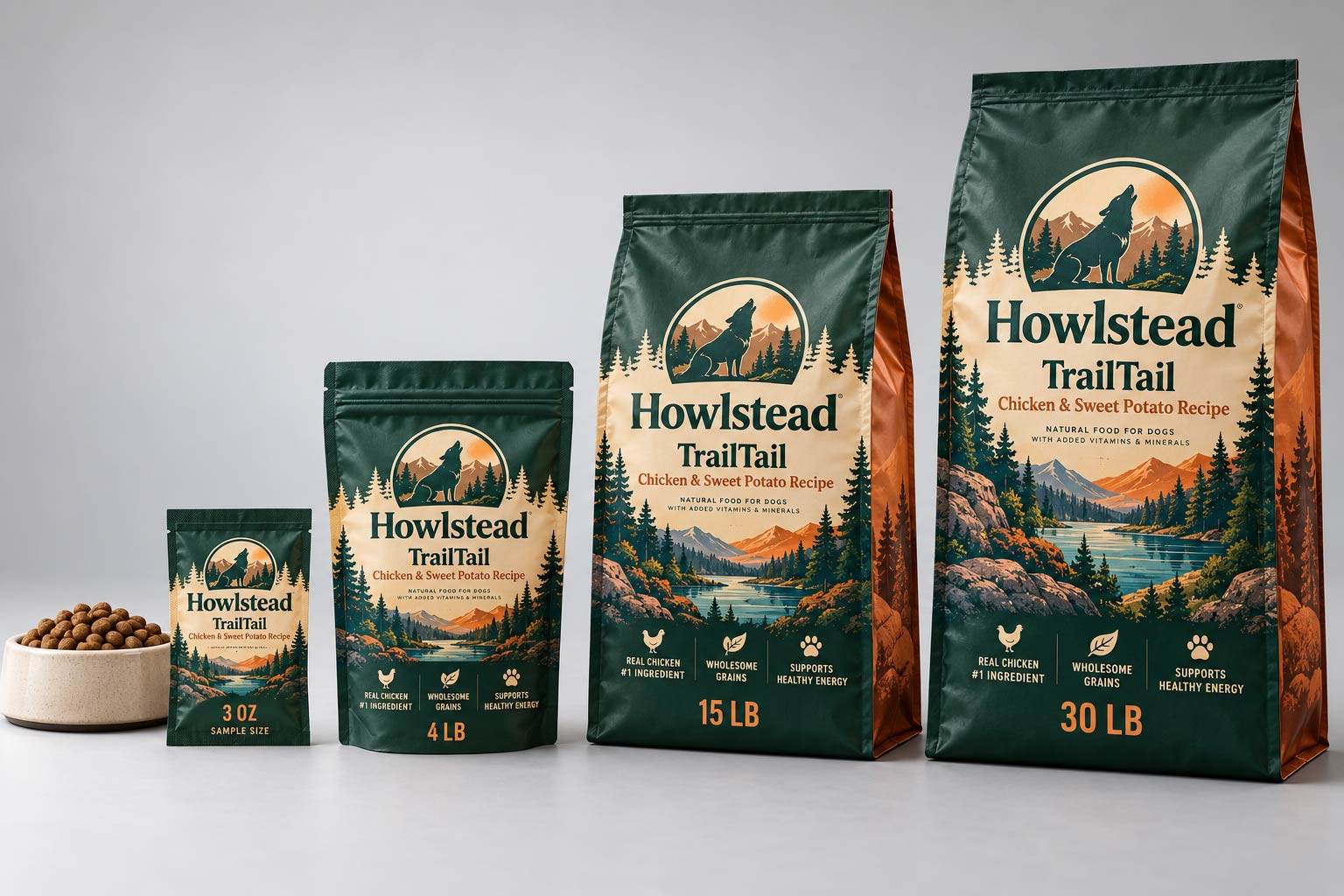
Dry food sells across a wide range of pack sizes, and the same recipe often needs three or four of them. We build the whole ladder so your lineup looks like one family on the shelf.
One thing worth knowing before you pick: bags are named by weight but built by volume, and two foods at the same weight can need different bags. Our post on pet food bag sizes explains the fill test that settles it.
Shape changes how a bag stands, stacks, and ships. These are the shapes dry food brands use most.


Dry food is coated in fat after extrusion, and fat is the thing that eventually tells on a cheap bag. It migrates into the material and shows as a dark patch, and it carries the aroma that draws pests. The barrier is where a kibble bag earns its price.
Two posts go deeper on this: why kibble bags stain from the inside and what actually makes a bag pest resistant.
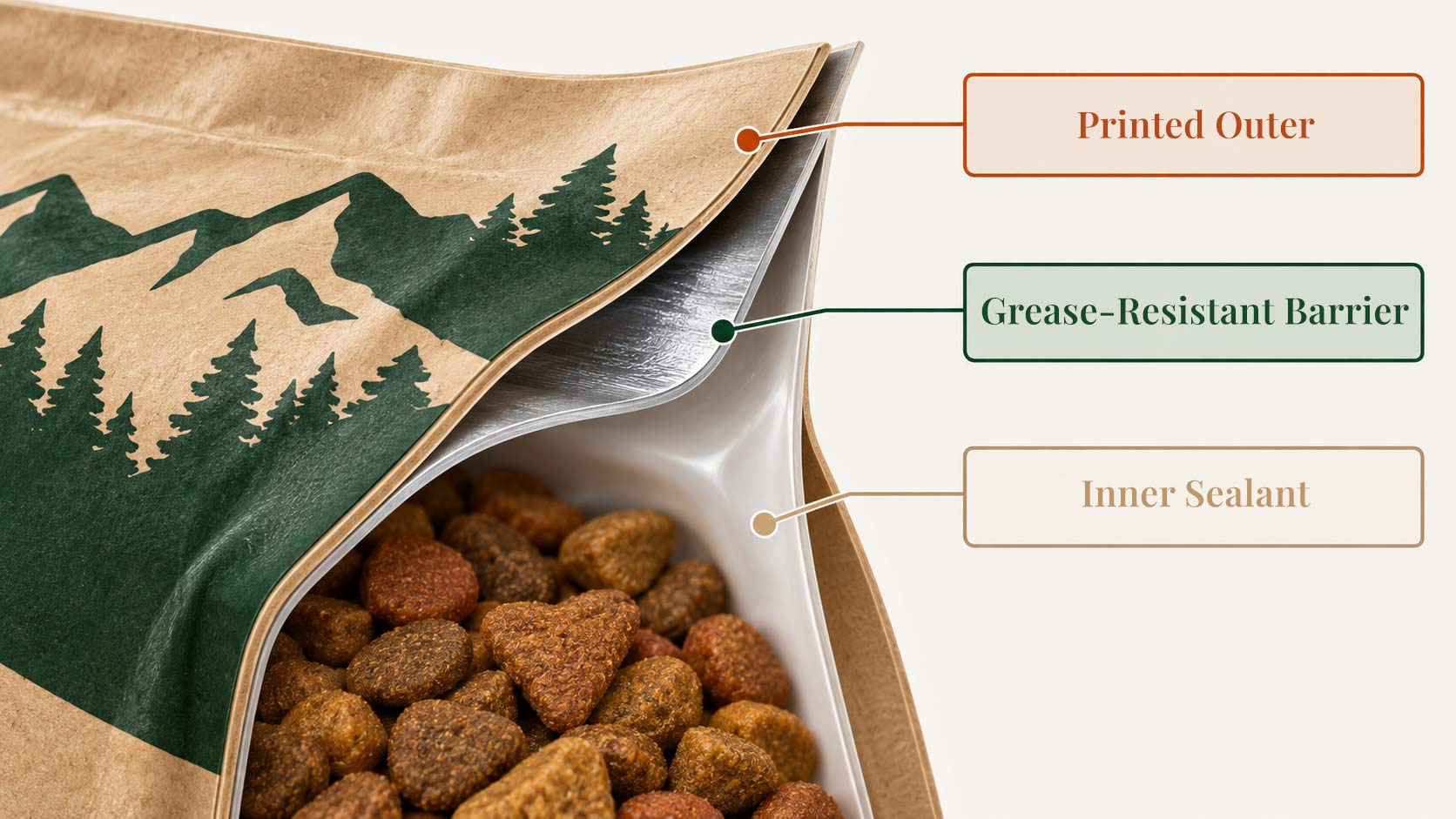
On a dry food bag, these are the details customers actually notice.
Not sure a zipper is worth it on your size? Our post on resealable pet food bags covers where closures pay off and where they do not. For big bags, carry handles is the one to read.
Start small and scale. The print path follows your order size, not the other way around.
No plates and fast turnarounds, which makes it the right call for a new recipe or a short run.
Learn more 10,000+ bagsEngraved cylinders and the lowest cost per bag once a size is a proven seller.
Learn more 1,000+ bagsReady-made bags finished with your label. The fastest way to get a dry food line to market.
Learn more Full customThe complete build, from dieline and barrier through to finish and features.
Learn moreLet's talk about your pet packaging.
1-business-day reply · Ships worldwide · Free, no obligation