
Pet Food Bag Sizes: Why Two 15 lb Bags of Kibble Need Different Bags
Pet food is sold by weight, but bags are built by volume, and that gap catches a lot of new brands off guard. Two recipes can both weigh 15 pounds and still need very different bags, because kibble size, shape, and density change how much room the food takes up. This guide covers pet food bag sizes in plain language: the common size ladder, why weight is not the same as volume, how to run a simple fill test, the right amount of headspace, and how bag style and closures change as the bag gets bigger.
Overview
Pet food is sold by weight, but bags are built by volume, and that gap catches a lot of new brands off guard. A brand orders bags for "15 pounds of kibble," fills the first one, and finds the food either spilling over the top or slumping in a half-empty bag. Both look bad on a shelf, and both are avoidable.
This guide covers pet food bag sizes in plain language. We will look at the size ladder most brands use, why two recipes with the same weight can need very different bags, how to run a simple fill test before you order, how much headspace to leave, and how bag style and closures change as the bag gets bigger.
The Pet Food Bag Size Ladder
Walk down any pet food aisle and you will see the same pattern. Most brands sell the same recipe in a ladder of sizes, each one aimed at a different kind of shopper.
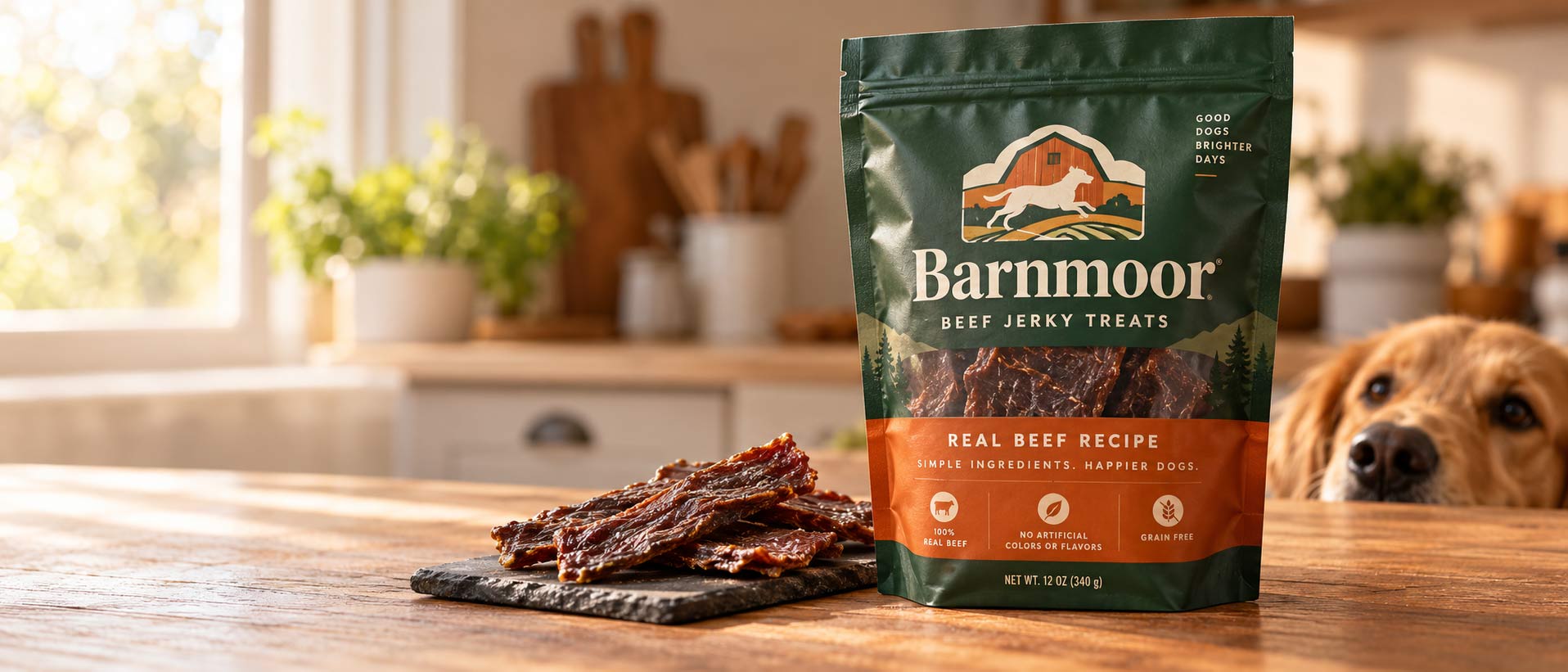
- Sample and trial bags let a new customer test a food before committing, and they are perfect for events, vet offices, and subscription add-ons.
- Small bags suit cat food, small breeds, premium recipes, and first-time buyers who do not want to risk a big bag.
- Mid-size bags are the everyday workhorse for a single dog or a household with a couple of cats.
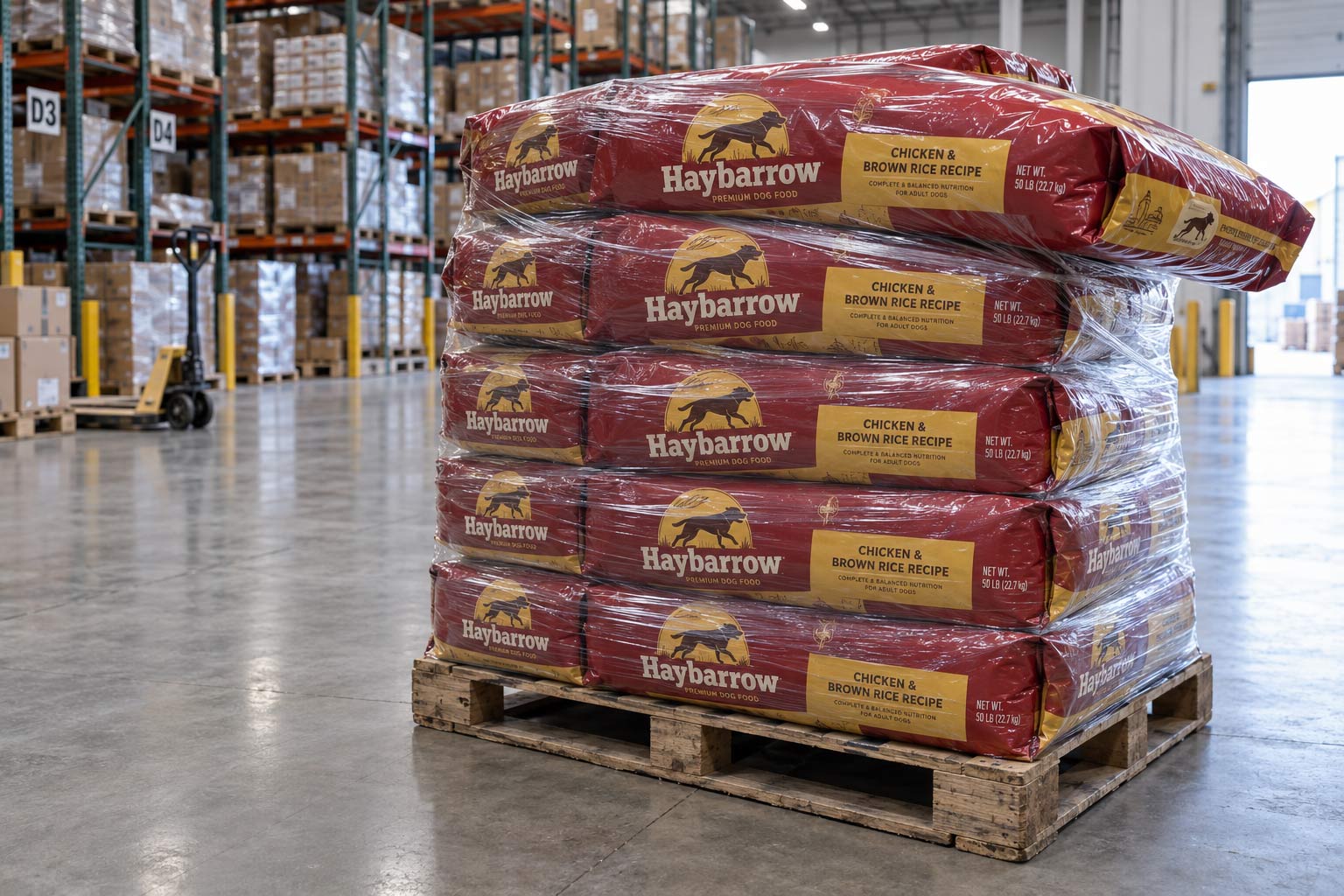
- Large bags serve big dogs and multi-pet homes, where value per pound is the main reason to buy.
You do not need every rung on day one. Many brands launch with one or two sizes, learn what their customers actually buy, and add sizes from there. The rest of this guide is about making sure each bag you do order fits the food inside it.
Weight Is Not Volume
Here is the part that trips people up. A bag size is usually named by the weight of food it holds, but the bag itself is made to hold a certain amount of space. How much space a pound of kibble takes up depends on the kibble.
- Kibble shape and size matter, because small, round pieces pack tighter than large, irregular ones, which leave gaps between them.
- Density varies by recipe, since a high-protein, high-fat kibble can be heavier for its size than a lighter, airier one.
- Puffed and freeze-dried foods are very light for their volume, so a few pounds can fill a surprisingly big bag.
- Treats, chews, and mixers vary even more, which is why a treat bag is almost always sized to the product, not to a weight chart.
So two recipes that both weigh 15 pounds can need two different bags. If you switch to a new kibble shape or reformulate a recipe, check the bag size again, even if the weight on the front stays the same.
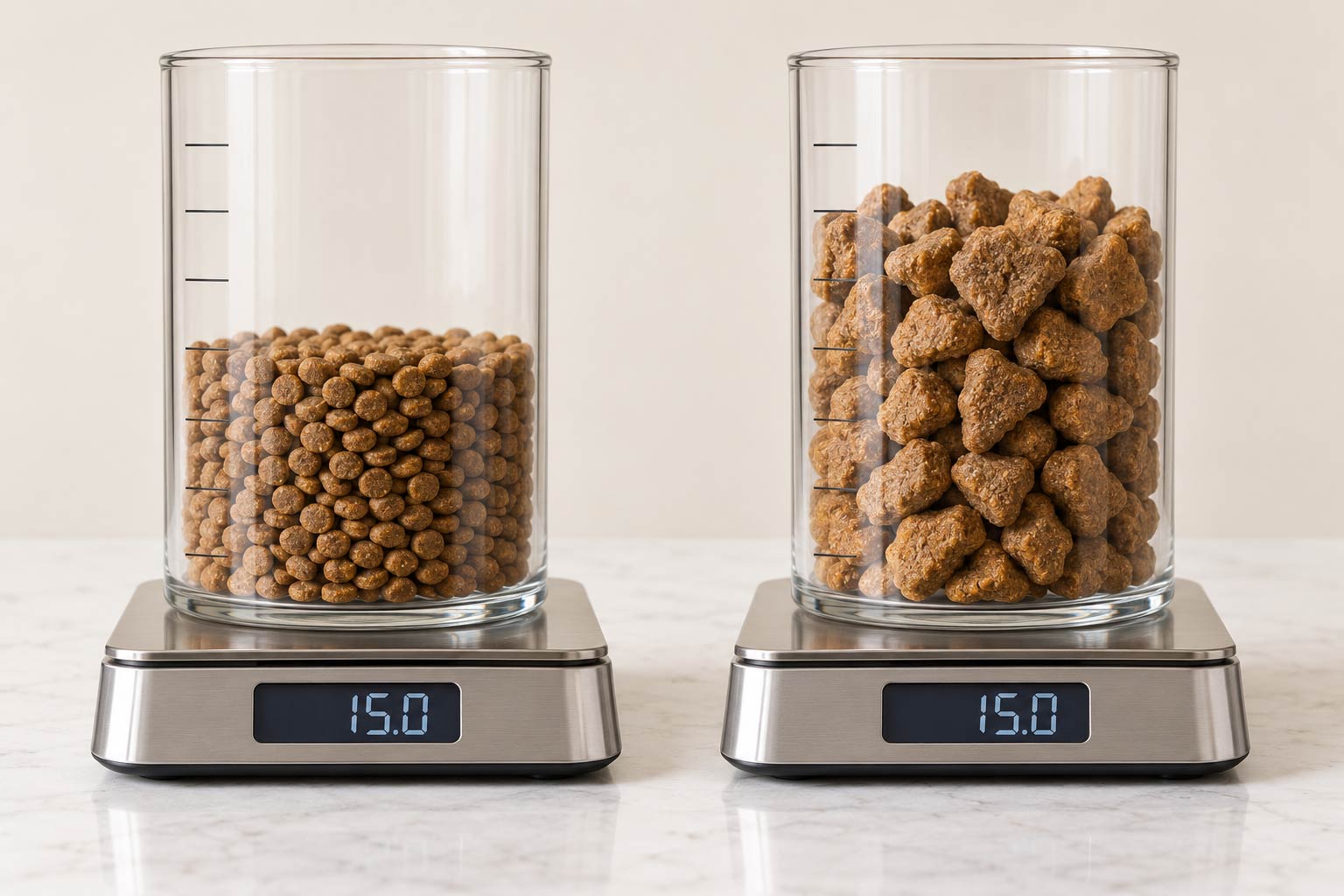
Run a Fill Test Before You Order
The most reliable way to size a pet food bag is to test it with your actual food, not a chart. It takes an afternoon and it can save an entire print run.
Weigh out the exact amount of food you plan to sell, pour it into a sample bag of the size you are considering, and shake it gently so it settles the way it will after a truck ride. Then look at where the food sits and how much room is left at the top.
- If the food comes up into the seal area, the bag is too small, and the seal may fail or look messy.
- If the food sits low with a big empty space above it, the bag is too big, and the half-empty look makes customers feel shortchanged.
- If the food settles a little below the top with room to close and reseal easily, you have found the right size.
Ask for samples in your target size before you approve a custom design. A sample costs very little compared with a full order of custom pet food bags that turn out to be the wrong size.
Leave the Right Amount of Headspace
Headspace is the empty room between the top of the food and the seal. It feels like wasted space, but it does real work.
- It gives the filling machine room to seal cleanly without catching kibble in the seal.
- It leaves space for a zipper or slider to open and close without jamming on the food.
- It lets the food settle in shipping without stressing the seams.
Too little headspace causes leaks and jammed zippers. Too much makes the bag look underfilled and can let the food shift around and break into crumbs. The fill test above is how you find the balance for your food.
Bigger Bags Need a Different Build
As the bag gets bigger, the format and construction have to change with it, because a large bag carries a lot more weight and gets handled a lot more roughly.
- Stand-up pouches work well for samples, small bags, treats, and premium recipes, and their resealable zippers suit food that is used over a few weeks.
- Flat-bottom and quad seal bags stand square and steady at mid and large sizes, and their flat panels give you more space for branding.
- Side gusset bags are a practical, economical choice for larger kibble bags that are stacked and shipped in volume.
- Heavier fills need tougher films and stronger seals, so tell us the fill weight up front and we will build the bag for it.
Reseal matters more as bags get bigger, because a large bag of kibble can stay open in a home for weeks. Our guide to resealable pet food bags covers the closures that keep a big bag fresh to the last scoop, and our pet food bag styles guide compares each shape in more detail.
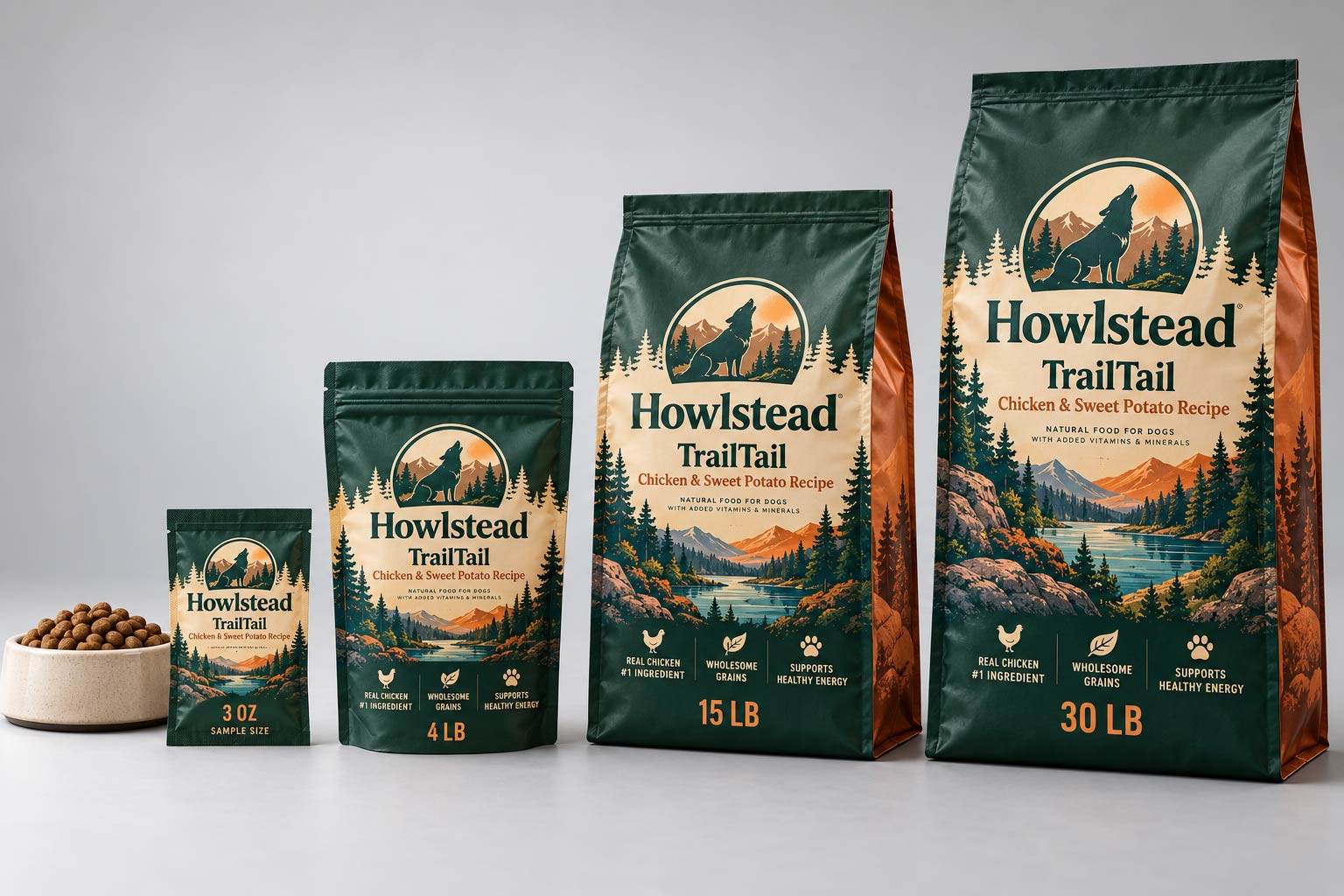
Ordering Several Sizes at Once
Once you know the sizes you need, you can plan your printing around them. Digital printing makes it practical to launch several sizes and recipes at once, since there are no printing plates to pay for on each design. As your best sellers grow into larger volumes, rotogravure printing lowers the cost per bag on long runs.
Keep your design consistent across the whole size ladder. When the small bag and the large bag look like the same family, a customer who tries the sample knows exactly which bag to reach for next time.
Wrapping It Up: Size the Bag to the Food
The number on the front of a pet food bag is a weight, but the bag itself is a measure of space, and the two only line up when you size the bag to your actual food. Pick the rungs of the size ladder that fit your customers, run a fill test with your own kibble, leave enough headspace to seal and reseal cleanly, and step up to a stronger format as the bags get bigger. Do that, and every bag on the shelf looks full, closes easily, and carries your food home in one piece.
Ready to Create Packaging Your Pets (and Customers) Will Love?
Let's bring your brand to life.
Get Started Today