
The Bag Kept Everything Out. The Mold Was Already Inside.
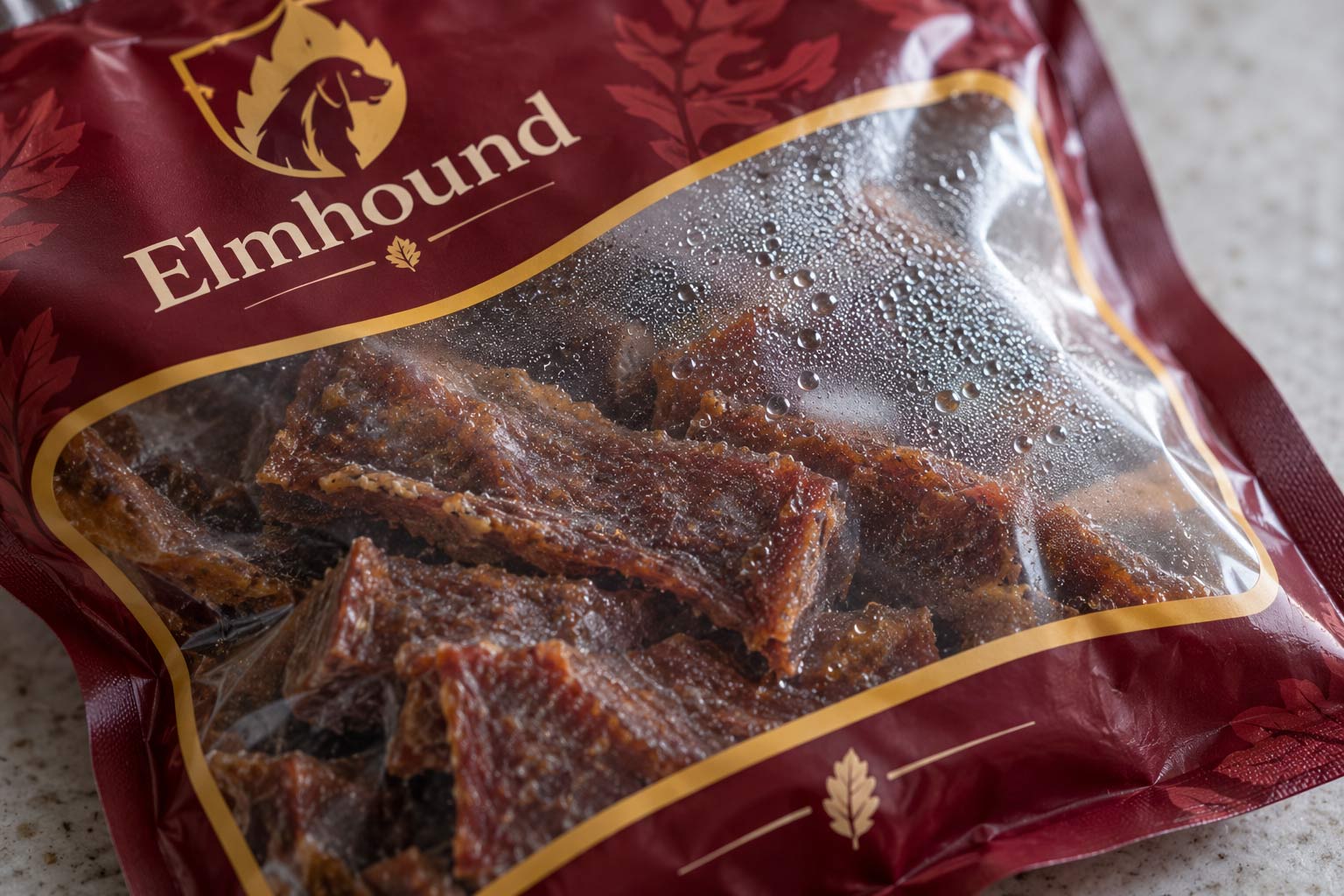
A customer opens a sealed bag of jerky treats and finds fuzzy spots. The seal is perfect, the film is high barrier, and nothing got in. That is exactly the problem. A great bag locks the outside world out, but it also locks in whatever moisture and air were sealed with the treats, and some treats bring enough of their own moisture to grow mold all by themselves.
Overview
The bag looks perfect. The seal is tight, the zipper is closed, the film is a high-barrier structure that cost more than the cheap option. And inside, on a few of the jerky strips or soft chews, there are pale fuzzy spots.
The first call is always about the bag. It must have leaked. The seal must have failed. Something must have gotten in.
Usually, nothing got in at all. The bag did its job perfectly. It kept the outside out. The problem is what it kept in.
A Good Bag Is a Closed Room
Here is the fact the rest of this post depends on.
A high-barrier bag is designed to stop air and moisture from passing through the walls. That is what protects kibble, freeze-dried food and dry treats so well. But a barrier works in both directions. It does not let moisture out either.
So whatever goes into the bag at sealing time stays there: the treats, the moisture inside the treats, and the air in the empty space around them. The bag becomes a small closed room, and anything that can grow in that room has as long as the shelf life to do it.
For a hard, dry biscuit, that is great news. For a soft, moist treat, it can be the start of the problem.
Water Activity: Not How Wet, but How Free
To understand why some treats mold and others never do, you need one idea that most treat makers only meet after a problem: water activity.
Water activity is not the same as moisture content. Two treats can hold the same amount of water and behave completely differently. What matters is how much of that water is free, meaning loose enough to move around and be used by mold and other microbes. Water that is tightly held by salt, sugar, or the structure of the food is not available to them. Free water is.
A lab measures water activity on a simple scale, and it is one of the most useful numbers a treat brand can know. A treat with a lot of free water is a comfortable home for mold once it is sealed in a closed room with a little air. A treat with very little free water is not, no matter how good or bad the bag is.
We are deliberately not giving you a safe number here. The right target depends on your recipe and your process, and it belongs to your formulator and a testing lab, not to a packaging blog. What we can tell you is that the bag cannot fix a treat that has too much free water. It can only keep the conditions inside stable.
Why It Shows Up Weeks Later
Mold is slow, and that makes the cause hard to see.
When a bag is sealed, the moisture inside the treats starts to even out with the air around them. Moist treats give some water to the air in the headspace, and that damp air settles on drier surfaces and on the inside of the film. If the bag was sealed while the treats were still warm from drying or cooking, the problem is worse, because warm air carries more moisture and drops it as condensation when it cools.
Then mold needs time. A bag can leave the facility looking perfect, pass every check, and only show spots weeks later on a store shelf or in a customer's pantry. By then nobody connects it to how the treats were dried or how warm they were when they were sealed.
The Packet That Is Often the Wrong Packet
Many treat makers already put a small packet in the bag. The trouble is that there are two very different kinds, and they are easy to mix up.
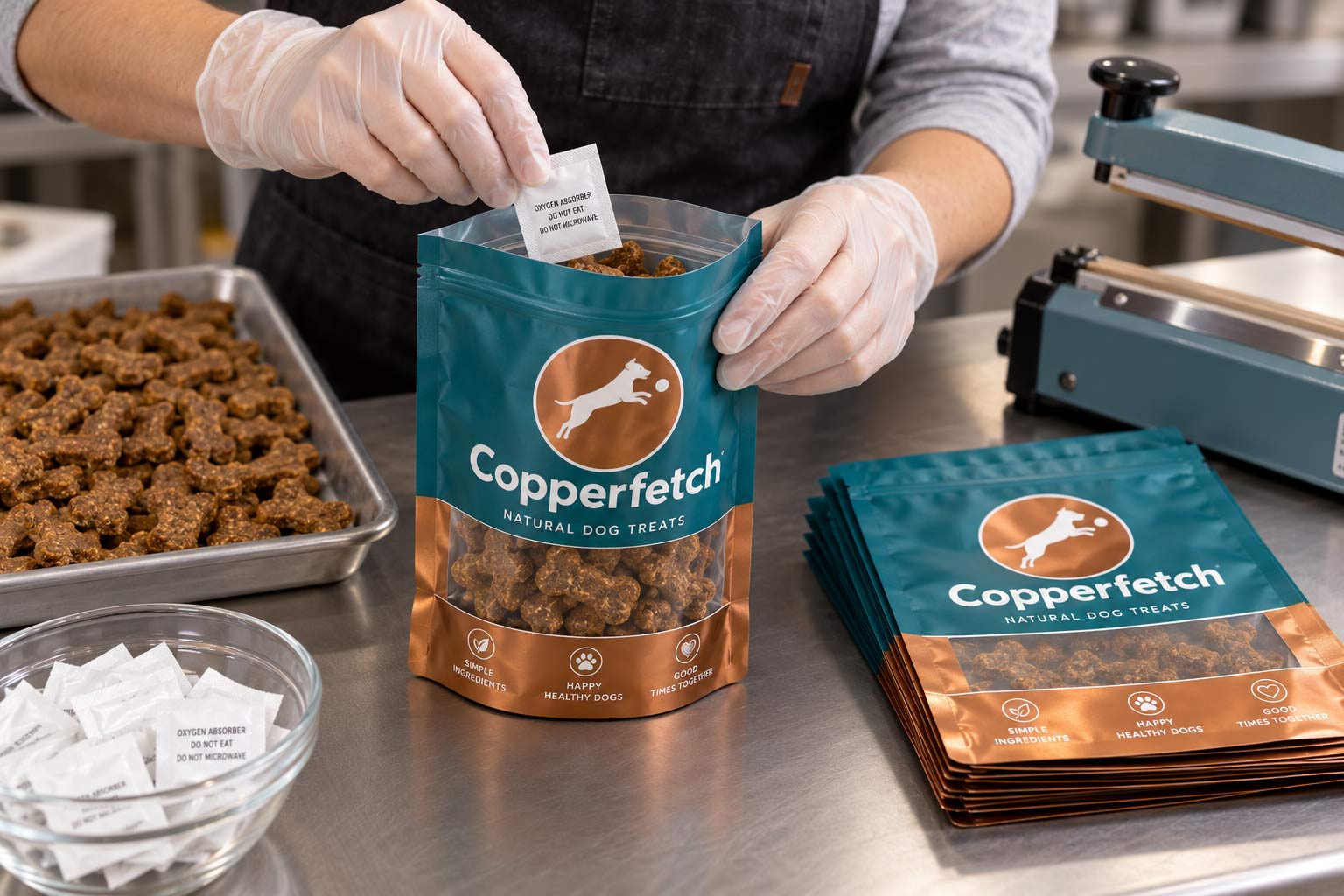
- Oxygen absorbers remove oxygen from the air inside the sealed bag. Most molds need oxygen to grow, so taking it away slows them down. This is usually the packet people mean when they talk about keeping jerky fresh.
- Desiccants soak up moisture. They help keep dry, crunchy products from going soft, but they do a different job, and they are not a stand-in for an oxygen absorber.
- Size matters. A packet sized for a small bag cannot handle a large one, and a packet that sat open on the packing table before it went in has already done part of its work on the room air.
- The bag has to hold the result. An absorber only helps if the film and seal keep fresh oxygen from leaking back in, which is where a real barrier and a clean seal earn their cost.
Picking the right packet, and the right size, is a conversation for your treat formulator and your packet supplier. Our part is making sure the bag can actually hold the conditions that packet creates.
How Savor Brands Handles This
A mold problem is solved by the treat and the bag together. On the bag side, these are the levers we work on with you.
- We ask what kind of treat it is. Hard biscuits, soft chews, jerky and freeze-dried treats each need a different structure, and moist treats need the most thought.
- We specify a real barrier. A high-barrier film keeps outside oxygen and moisture from undoing the conditions inside the bag over the shelf life.
- We care about the seal. A seal with grease or crumbs in it can let air back in slowly, which is why our post on seal failure matters for treats too.
- We look at headspace. Less empty air in the bag means less oxygen and less moisture for anything to use.
- We size the bag for the packet. If you use an oxygen absorber, the bag needs room for it and a structure that keeps oxygen out afterward.
For the bigger picture on bag styles and closures for treats, see our pet treat packaging guide and our treat and chew packaging options.
Why It Looks Like a Bag Problem
The misdiagnosis is understandable. The mold is inside the bag, so the bag gets blamed.
But look at the evidence. The seal is intact. There is no tear or pinhole. Other products in the same film never mold. And the mold shows up on the moistest treats first. A leaking bag lets damage in from the outside. A treat with too much free water grows mold from the inside, in a bag that kept everything out exactly as designed.
Wrapping It Up: Test the Treat, Then the Bag
If you find mold in a sealed bag, check the seal first, and if it is good, look at the treat. Get its water activity tested by a lab, check how warm it was when it was sealed, and make sure any packet in the bag is an oxygen absorber of the right size that was not left sitting open.
Then make sure the bag can hold the conditions you create. If your treats need a structure built for that job, tell us about your treats and we will spec the barrier, the seal and the headspace to match. Our post on freeze-dried and raw packaging covers the opposite problem, food so dry it pulls moisture in.
Ready to Create Packaging Your Pets (and Customers) Will Love?
Let's bring your brand to life.
Get Started Today