
The Hole Came From the Inside. Hard Chews Puncture Their Own Bags.
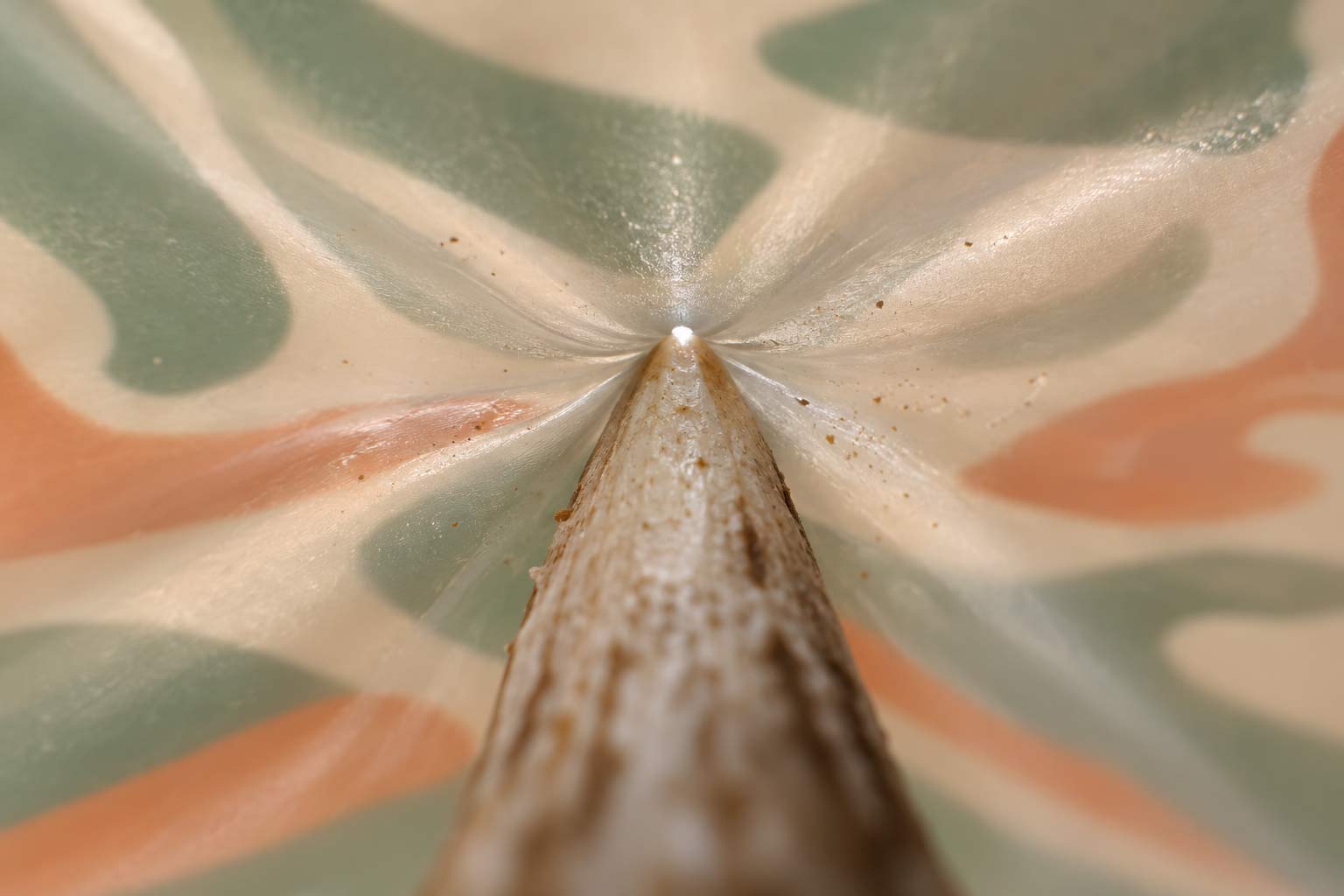
A bag of antler chews arrives with a pinhole in it, and everyone blames the shipper. Look closer and the hole lines up with the sharp tip of a chew. Hard, pointed treats press against the film every time the bag is filled, shaken, stacked or squeezed, and a point concentrates that force into one tiny spot. The fix is a tougher film, a smarter pack and a little room to move, all decided before the bags are printed.
Overview
The return comes in with a photo: a bag of antler chews with a small hole in it, and a few treats that have gone soft or dusty. The obvious suspect is the shipping company, or a rough warehouse, or a bad batch of bags.
Then you look at where the hole is. It sits right where the sharp tip of a chew was pressing against the inside of the film.
Nothing tore that bag from the outside. The product did it. This post explains how that happens and, more usefully, exactly how to pack hard chews so it stops.
Why Do Hard Treats Puncture Their Own Bags?
Because a point turns ordinary handling into a lot of pressure on one tiny spot. A smooth biscuit spreads its weight over a wide area of film. The tip of an antler, the broken edge of a bone, a hoof or the corner of a hard dental chew pushes the same weight into an area smaller than a pencil point.
That pressure happens over and over again. The treat presses on the film when it drops into the bag, every time the bag is shaken on the filling line, every time a carton is stacked or dropped in transit, and every time a shopper squeezes the bag in the store. Each push is small, but the film gets pushed in the same spot again and again until it gives.
The result is often a pinhole, not a tear, which is why it gets missed. A pinhole is enough to let in air and moisture, and that is when good treats start going stale or, worse, growing mold, the problem we covered in mold inside a sealed treat bag.
Which Treats Are Most Likely to Do It?
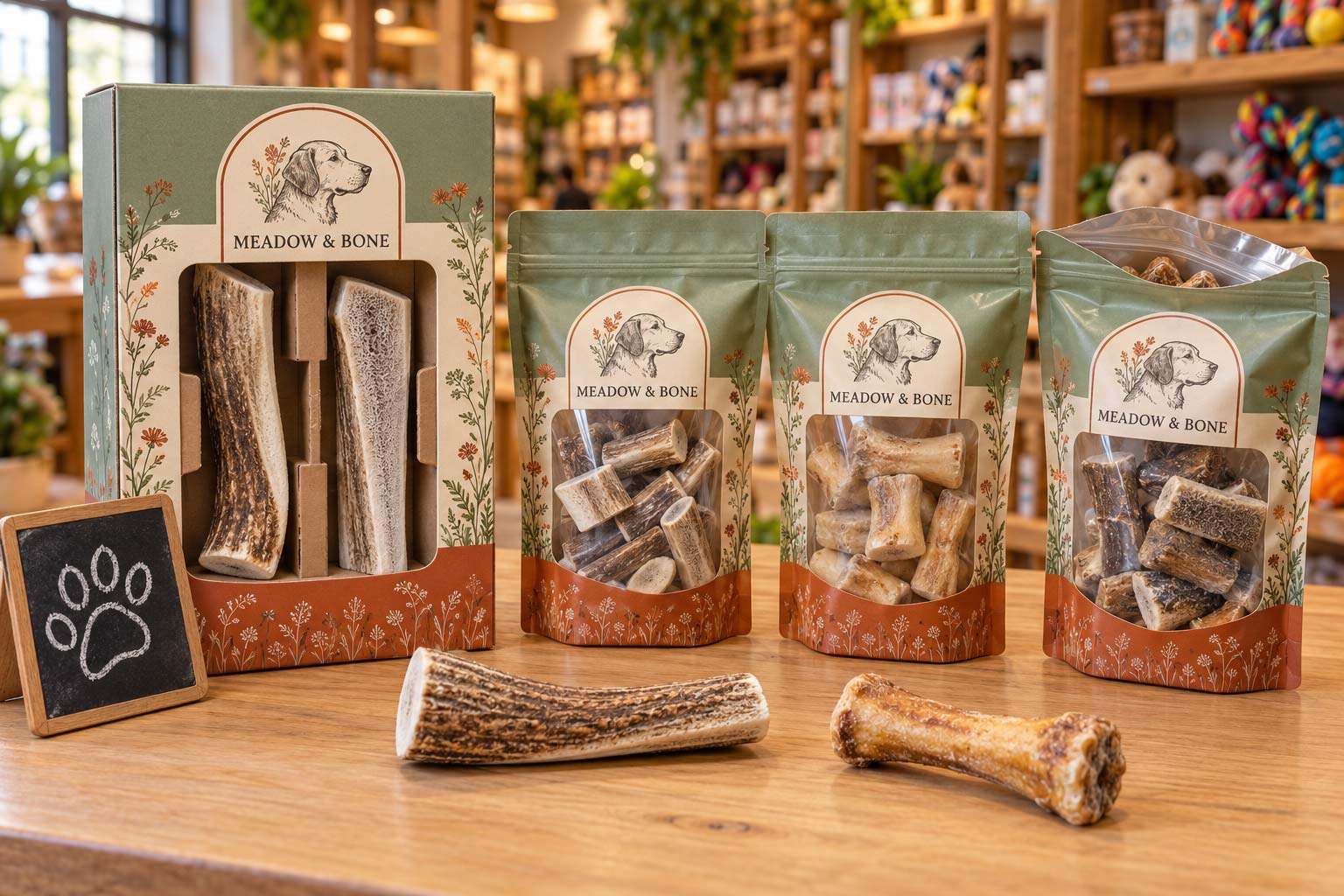
Anything hard, sharp or pointed. If you can feel an edge with your thumb, the film can feel it too.
- Antlers and horns, especially split pieces with sharp tips.
- Bones and hooves, including cut or cracked edges.
- Hard dental chews with ridges, points or star shapes.
- Freeze-dried pieces that dry into stiff, jagged shapes.
- Jerky and bully sticks with hard, dried-out ends.
Soft treats and small kibble-shaped treats rarely cause this. It is a hard chew problem.
How Do You Stop It? Fix the Film, the Fill and the Pack
There is no single magic film, but there are several changes that work, and they work best together.
Use a tougher film structure. Some packaging films are much better at resisting a sharp point than others. A structure that includes a puncture-resistant layer, nylon is the common one, holds up far better against hard chews than a basic film of the same thickness. A thicker inside sealant layer helps too. This is the single biggest change for most brands, and it has to be specified when the bag is designed.
Do not vacuum pack sharp chews tight. Pulling the air out sucks the film down hard onto every point, which is the worst case for puncture. Leave a little headspace so the treats can shift instead of pressing against one spot, or use a gas flush instead of a vacuum if you need to keep oxygen out.
Put fewer, larger pieces in a bag, or separate them. A bag with fewer hard pieces has fewer points pressing on the film. For the sharpest products, a simple insert or individually wrapped pieces keep the points away from the outer bag.
Use a box for the hardest products. For large antlers, horns and bones, a printed box or a box with a window often makes more sense than a pouch at all. Our custom boxes give hard chews a rigid home that a point cannot push through.
Pack cartons so bags cannot rub. Tight cartons and dividers cut down on the shaking and stacking pressure that drives the point into the film over the trip.
How Do I Test My Bags Before I Order?
Fill real bags with your real product and treat them roughly, the way the supply chain will.
- Shake and drop test a few filled bags, then look for pinholes, not just tears.
- Hold each bag up to a bright light in a dark room. Pinholes show up as tiny points of light.
- Squeeze test a sealed bag gently underwater. Bubbles show you exactly where the leak is.
- Check the seals separately, so you know whether a leak is a puncture or a seal that never closed. Our post on seals that never closed explains the difference.
How Savor Brands Handles This
Puncture is predictable once you know the product, so we plan for it before anything is printed.
- We ask what the treat is like to hold. Hard, sharp and pointed products get a different film recommendation than soft ones.
- We match the structure to the chew, including a puncture-resistant layer when the product calls for it, as part of our treat and chew packaging.
- We talk through the format. Sometimes the right answer is a tougher pouch, and sometimes it is a box.
- We help you test with real product before a full run, and short runs on digital printing make that easy.
- We keep the structure the same on reorders, so a bag that passed your tests keeps passing them.
Wrapping It Up: Respect the Point
When a bag of hard chews shows up with a hole in it, check where the hole is before you blame the shipper. If it lines up with a sharp edge, the treat did it from the inside. Choose a tougher film, skip the tight vacuum, give the pieces room or separation, use a box for the sharpest products, and test with real product before you order.
Do that and your chews arrive the way they left. If you are packaging antlers, bones or hard dental chews, tell us about your treats and we will help you pick a bag that can take the point. For more on keeping treats fresh once they are sealed, see our guide to pet treat packaging.
Ready to Create Packaging Your Pets (and Customers) Will Love?
Let's bring your brand to life.
Get Started Today