
Pet Treat Packaging: Bagging Treats, Chews, and Jerky So They Sell and Stay Fresh
Treats are where a lot of pet brands start, and they are also where packaging gets tricky fast. A bag of jerky, a pouch of soft training treats, and a stack of bully sticks do not want the same package. This guide covers the treat formats that work, how to keep treats fresh once the bag is opened, how to size the bag to the treat, and how to make a small pouch look premium on a crowded shelf.
Overview
Treats are where a lot of pet brands get their start, and they are also where packaging gets tricky fast. A bag of jerky, a pouch of soft training treats, and a stack of bully sticks are all called treats, but they do not want the same package. Some are handed out a few pieces at a time over weeks. Some are greasy. Some are long and sharp. The bag has to handle all of that while still looking good enough to grab off a shelf or hang by a register.
This guide covers pet treat packaging in plain language. We will look at why treats are their own packaging problem, how to match the format to the kind of treat, how to keep treats fresh once the bag is opened, how to size the bag so a small treat does not look lost, and how to make a little pouch look like a premium product. Whatever you make, our treat and chew packaging is built around that repeat-open habit.
Treats Are Not Just Small Bags of Kibble
It is tempting to treat a treat bag like a shrunken dog food bag, but the way treats are bought and used is different, and that changes the package.
- Treats are often an impulse or gift buy, so the bag has to sell itself on looks in a few seconds.
- They are given a few pieces at a time, so the same bag gets opened and closed far more often than a meal food.
- Treat shapes vary a lot, from tiny soft training bits to long bully sticks, and each shape needs a different bag.
- Many treats are rich in fat and oil, which makes freshness and grease a bigger deal than with dry kibble.
Start from how your specific treat is made, bought, and used, and the right package gets a lot easier to see.
Match the Format to the Treat
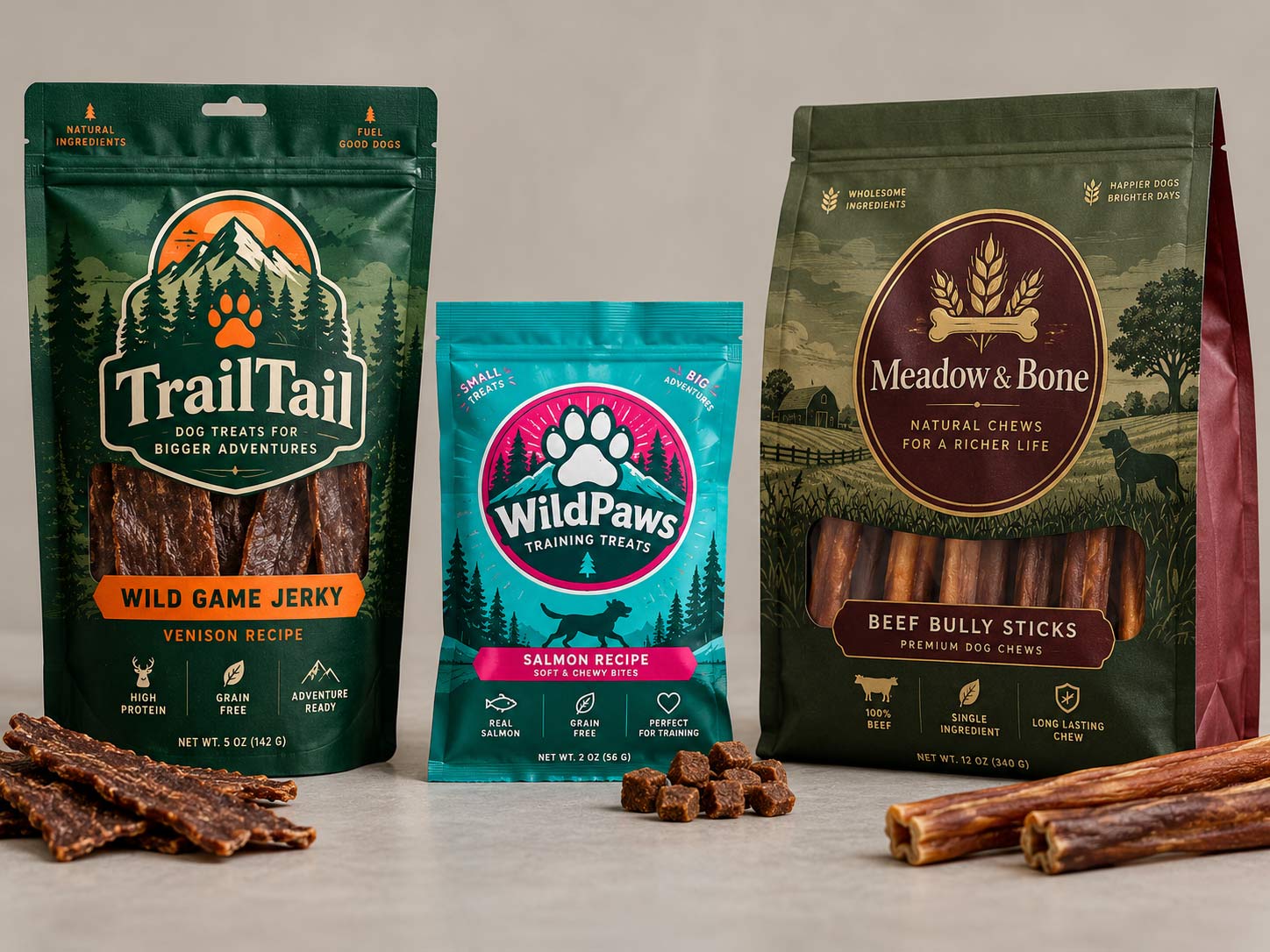
There is no single treat bag. The best format depends on the size, shape, and richness of what goes inside. Here is how the common ones line up.
- Soft, moist treats and training bits do well in a small resealable stand-up pouch that keeps them from drying out.
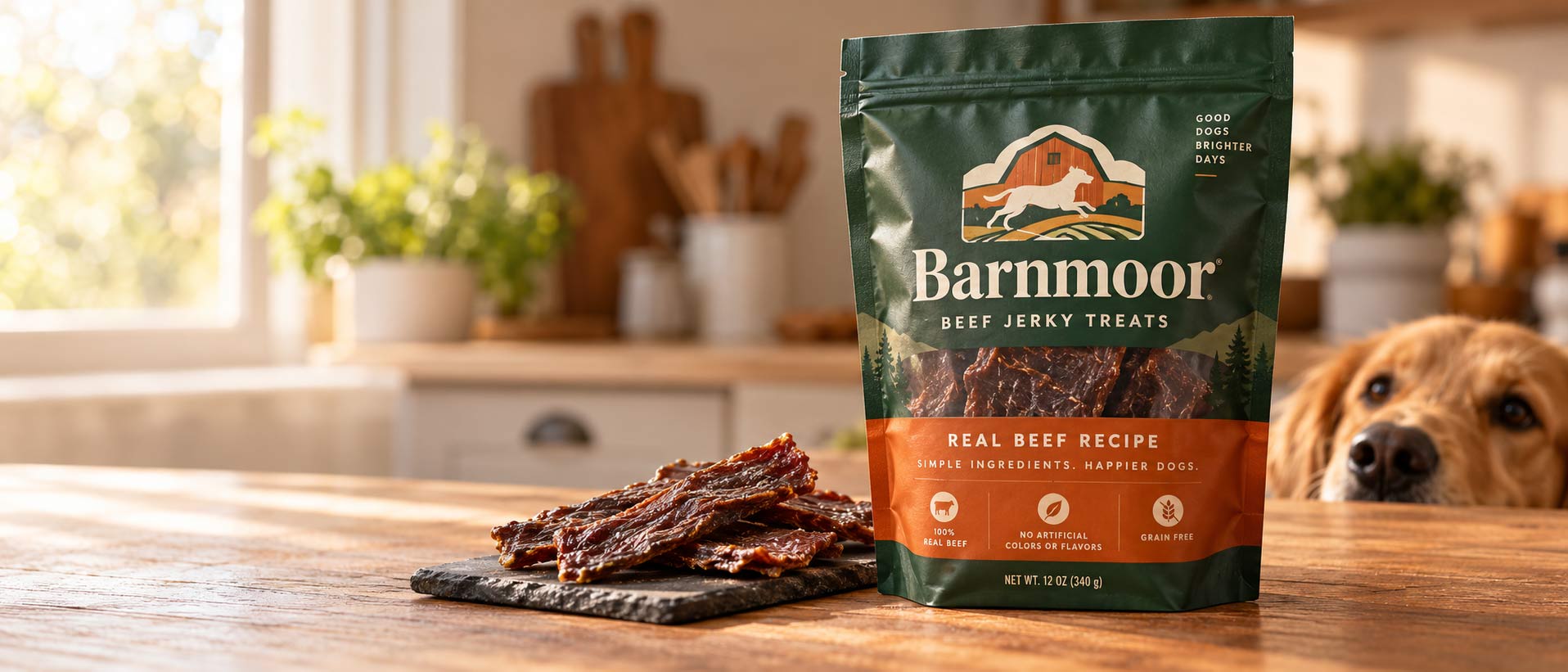
- Jerky and meaty strips suit a taller stand-up pouch with a strong barrier, since these are oily and lose quality if air gets in.
- Hard biscuits and crunchy treats can go in a stand-up pouch or a flat bottom bag, and a clear window lets the shape show.
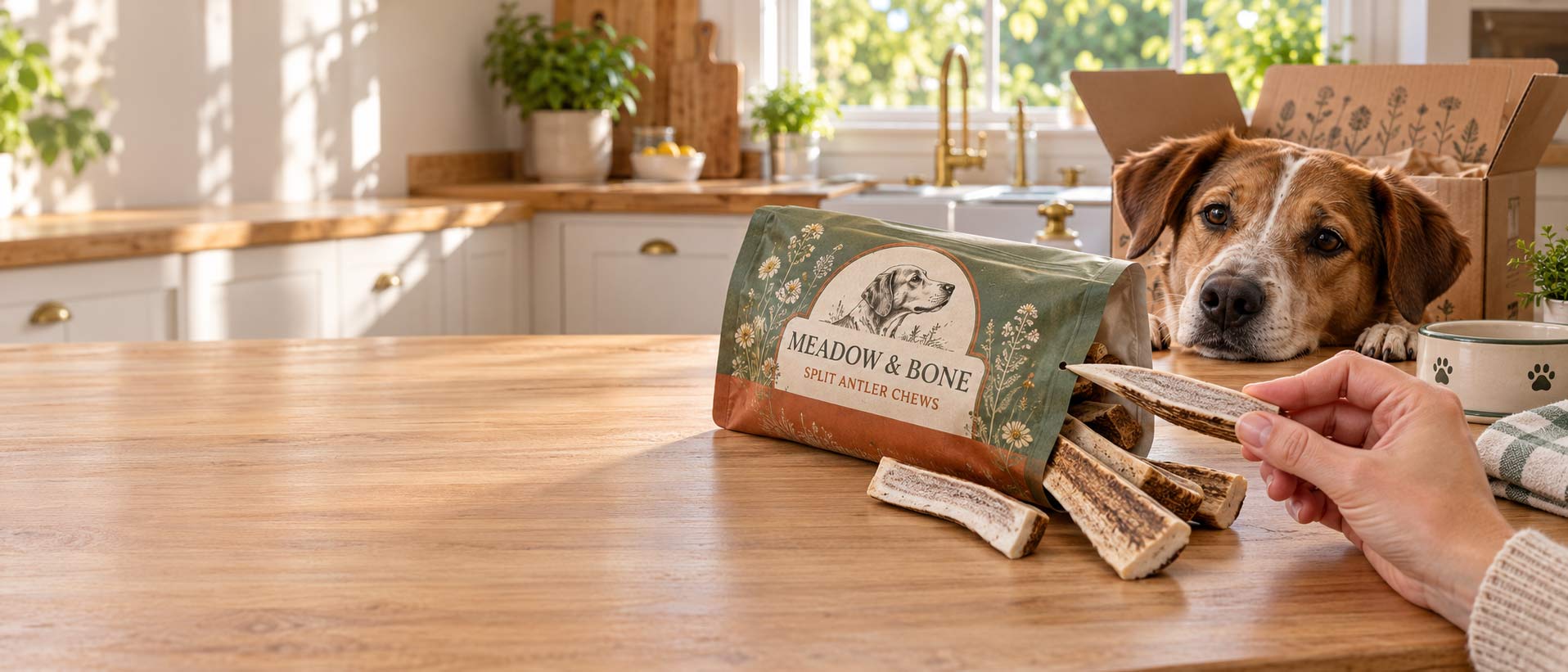
- Bully sticks, chews, and long treats need a wider or taller bag, often a side gusset style, so they are not crammed or poking the seams.
- Single serve samples and giveaways work as a small flat pouch with a simple tear notch, since they are used in one go.
Keep Treats Fresh After the First Handful
Because treats are handed out a few at a time, the bag might stay open for weeks. That makes the closure and the barrier just as important as they are on a big food bag, sometimes more, because treats are often richer than kibble.
- A resealable zipper or a hook-and-loop strip lets the customer close the bag after every handful.
- A strong barrier film keeps oxygen out between openings, which stops the fats in jerky and meaty treats from going rancid.
- A tin tie gives a rustic, handmade look on biscuit and bakery-style treats while still folding shut.
Reseal and barrier do two different jobs, and a treat bag usually needs both. The closure protects the treats after opening, and the barrier protects them before and between. If your treats are freshly baked or freeze-dried, they may keep releasing gas, which is where a valve and a high barrier earn their place, the same way they do on raw and freeze-dried packaging.
Size the Bag to the Treat
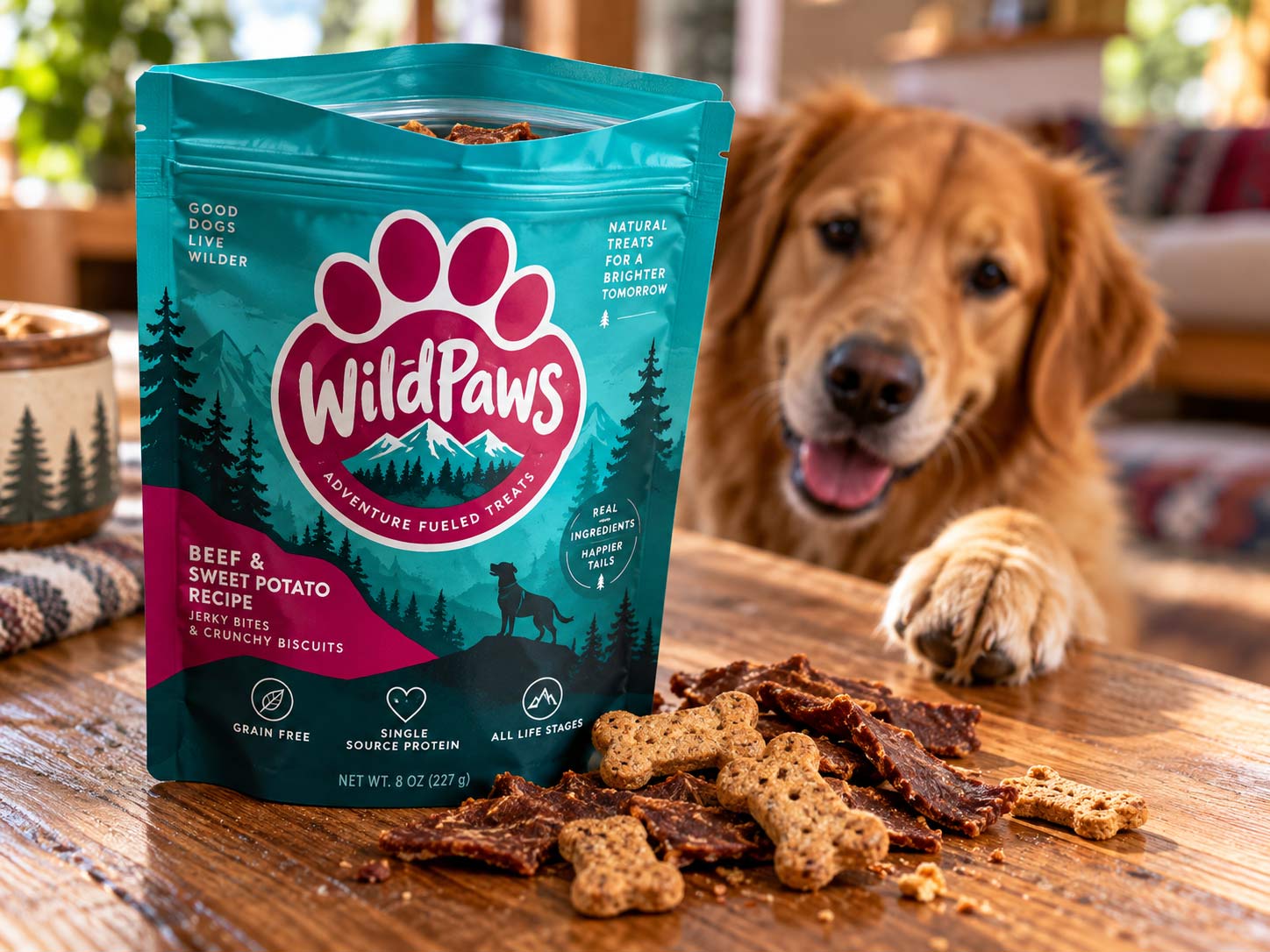
A common mistake is putting a small amount of treats in a bag that is too big. It looks half empty, feels cheap, and wastes material. Treats are light and often small, so the bag needs to be sized to the real fill, not guessed.
- Match the bag to the treat's weight and bulk, remembering that light, airy treats fill more space than their weight suggests.
- Leave enough headspace above the treats so the zipper closes cleanly without fighting a stuffed bag.
- If you sell one treat in several sizes, keep the bag shapes consistent so the line looks like a family on the shelf.
When you spec custom pet food bags for a treat line, filling the real product into the real bag before you commit saves you from a package that looks wrong the day it arrives.
Make a Small Pouch Look Premium
Treats live in a crowded, colorful part of the store, often near the register where people grab on impulse. A small bag has to punch above its size.
- A clear or frosted window shows the actual treats, which builds trust for food a pet is going to eat.
- A die-cut shape or a bold, full-bleed label pulls the eye from across an aisle.
- A matte or soft-touch finish makes a small pouch feel more premium in the hand.
- A hang hole lets the bag sit on a display hook by the counter, where impulse treats sell.
Bright, full-color printing is easy to reach now even in small runs, so a new treat brand can look polished without a huge order. Our digital printing is built for exactly that kind of small, high-impact treat run.
A Word on Sustainable Treat Bags
Pet owners increasingly read the back of the bag, and treat buyers are some of the most loyal shoppers out there. If sustainability is part of your story, treats are a natural place to show it, since the bags are small and the volumes are approachable. Compostable films and recyclable mono-material pouches both work for many treats, and our sustainable pet packaging can match the eco claim to what the treat actually needs. Keep the claim honest and specific, and it becomes a reason to buy rather than just a logo.
Wrapping It Up: Small Bag, Big Job
A treat pouch is little, but it works hard. It has to fit an odd-shaped, often greasy product, keep it fresh through weeks of daily opening, and still look good enough to grab on impulse. Start from the treat itself, match the format and the closure to how it is used, size the bag to the real fill, and give it the finish it deserves.
Do that, and the bag sells the treat, protects it, and brings the customer back for the next one, which is how a treat becomes a habit.
Ready to Create Packaging Your Pets (and Customers) Will Love?
Let's bring your brand to life.
Get Started Today