
Wet Pet Food Packaging: Retort Pouches, Single-Serve, and the High-Moisture Job
Wet pet food breaks every rule that kibble packaging plays by. It is high in moisture, rich and aromatic, often cooked right inside the sealed pouch, and most of it is eaten in a single serving. This guide covers wet pet food packaging in plain language: the retort pouch that survives being cooked like a can, the foil barrier and sealant that stand up to a wet, oily, aromatic food, the difference between a single-serve tear-open pouch and a resealable multi-serve bag, and how a foil package still sells a premium meal on the shelf.
Overview
A bag of kibble just has to stay closed and dry. Wet pet food asks for almost the opposite. It is full of moisture, rich with fat and aroma, often cooked right inside the package to make it shelf stable, and most of it is portioned to be eaten in one sitting. That is a completely different job for the packaging, and a bag built for dry food would fail at it on day one.
This guide covers wet pet food packaging in plain language, for both cat and dog brands. We will look at why wet food breaks the kibble rules, what a retort pouch is and why the food is cooked inside it, the barrier and sealant a wet and oily food needs, the real difference between single-serve and multi-serve formats, and how a foil package still sells a premium meal on a crowded shelf.
Why Wet Food Breaks the Kibble Rules
Wet food is a harder product to hold than dry food, and the reasons stack up quickly once you look at what is actually inside the pouch.
- It is mostly water, so the package has to be fully sealed and leak-proof, since liquid finds every weak spot.
- It is rich and oily, and fat can migrate into a cheap film, stain it, or weaken a seal over time.
- It is intensely aromatic, which is the whole appeal to the pet, so the package has to hold that smell in until the moment it is opened.
- It is often cooked after filling to make it safe at room temperature, which means the package has to survive heat and pressure, not just sit on a shelf.
Start from the food itself, how wet, how fatty, how it is processed, and the right package gets much clearer. Wet food is also where cat brands live, so if you sell cat food it is worth reading how a cat bag is not just a smaller dog bag alongside this.
Cooked in the Bag: The Retort Pouch
The thing that makes most wet pet food shelf stable is a process called retort. The food is filled into the pouch, the pouch is sealed, and then the whole sealed package is cooked under heat and pressure, a lot like canning. That cook is what lets a wet food sit on a shelf for a long time without refrigeration, so the package is not just a wrapper. It is the can.
That puts a real demand on the pouch. A retort pouch is built from a foil laminate, usually with an aluminum layer sandwiched between tough outer and inner films, so it can take the heat of the cook without warping, delaminating, or springing a leak. This is exactly the kind of construction our wet food pouches are made for, rather than a general-purpose bag borrowed from the dry-food aisle that was never meant to be cooked.
Barrier and Sealant for a Wet, Rich Food
With wet food, the inside of the package matters as much as the outside. The barrier keeps oxygen, light, and moisture in check so the food holds its flavor and does not go off, and the sealant layer, the innermost film that touches the food, has to be chosen for what that food is made of.
- A foil layer gives a near-total barrier to oxygen and light, which protects the fats from going rancid and keeps that strong aroma locked inside.
- The sealant has to resist the fat and the mild acidity in a rich, meaty food, so it does not break down or let a seal creep over time.
- The seal itself has to be strong and clean, because a wet product punishes a weak seal far harder than a dry one ever will.
This is the match we make when we build custom pet food bags for wet food, pairing the structure to the recipe and the process instead of forcing a wet meal into a film meant for something dry.
Single-Serve: Portioned, Tear-Open, No Reseal
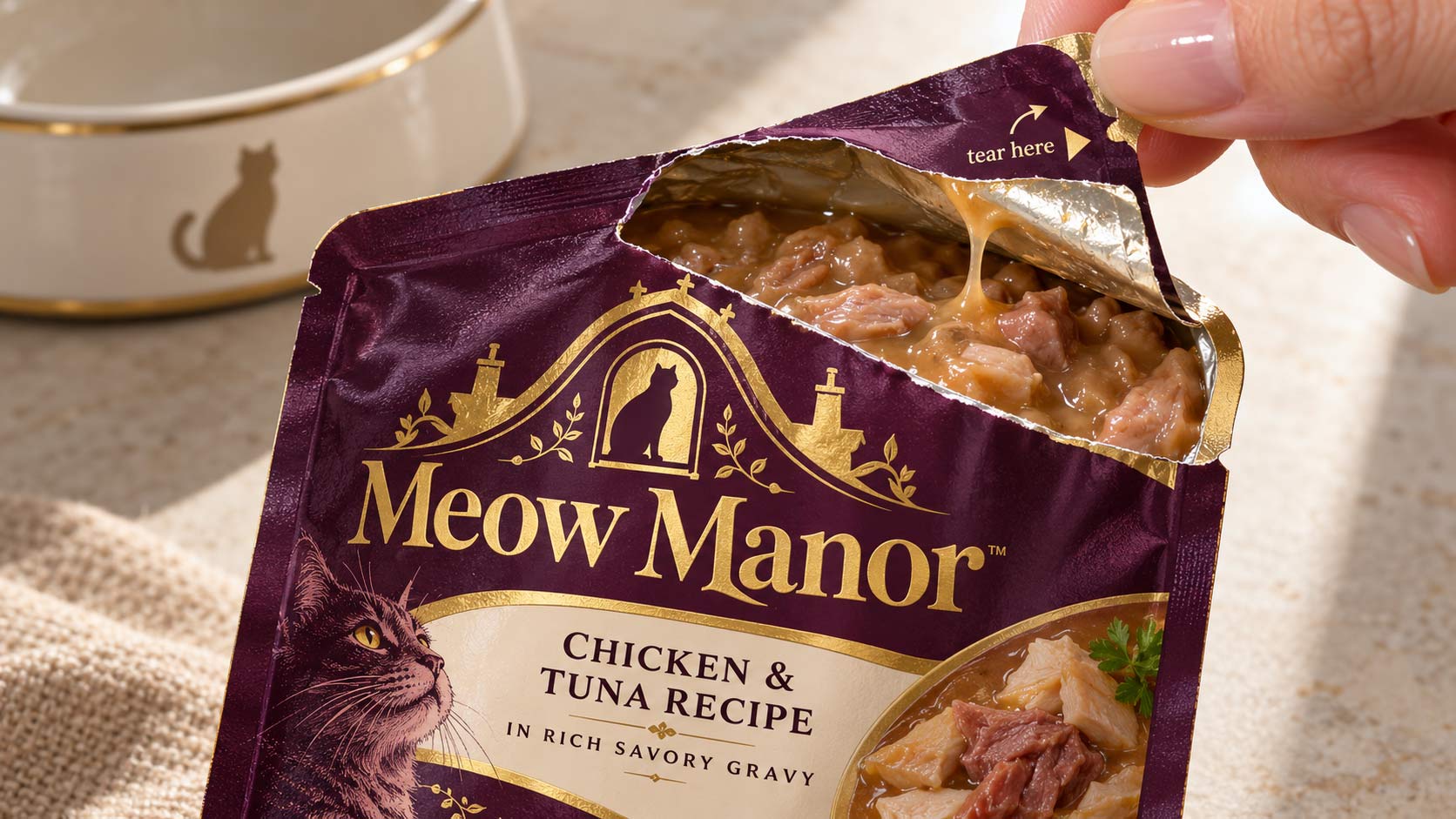
A huge share of wet food is sold single-serve, one pouch for one meal, and that changes the package in a helpful way. Because the whole pouch is used at once, it does not need a zipper or a reseal at all. What it needs instead is to open easily and cleanly.
- A tear notch lets the pet owner rip the top open in one motion without scissors and without a mess.
- A flat, portioned pouch pours a single serving cleanly into the bowl and then goes straight in the bin.
- No reseal means one less feature to pay for and one less thing to fail, which keeps a high-volume product simple.
Multi-Serve: Reseal, Spouts, and Bigger Bags
Not all wet food is single-serve. Larger pouches and tubs feed a bigger pet, or several pets, across more than one meal, and the moment a package is meant to be opened and closed again, the rules shift.
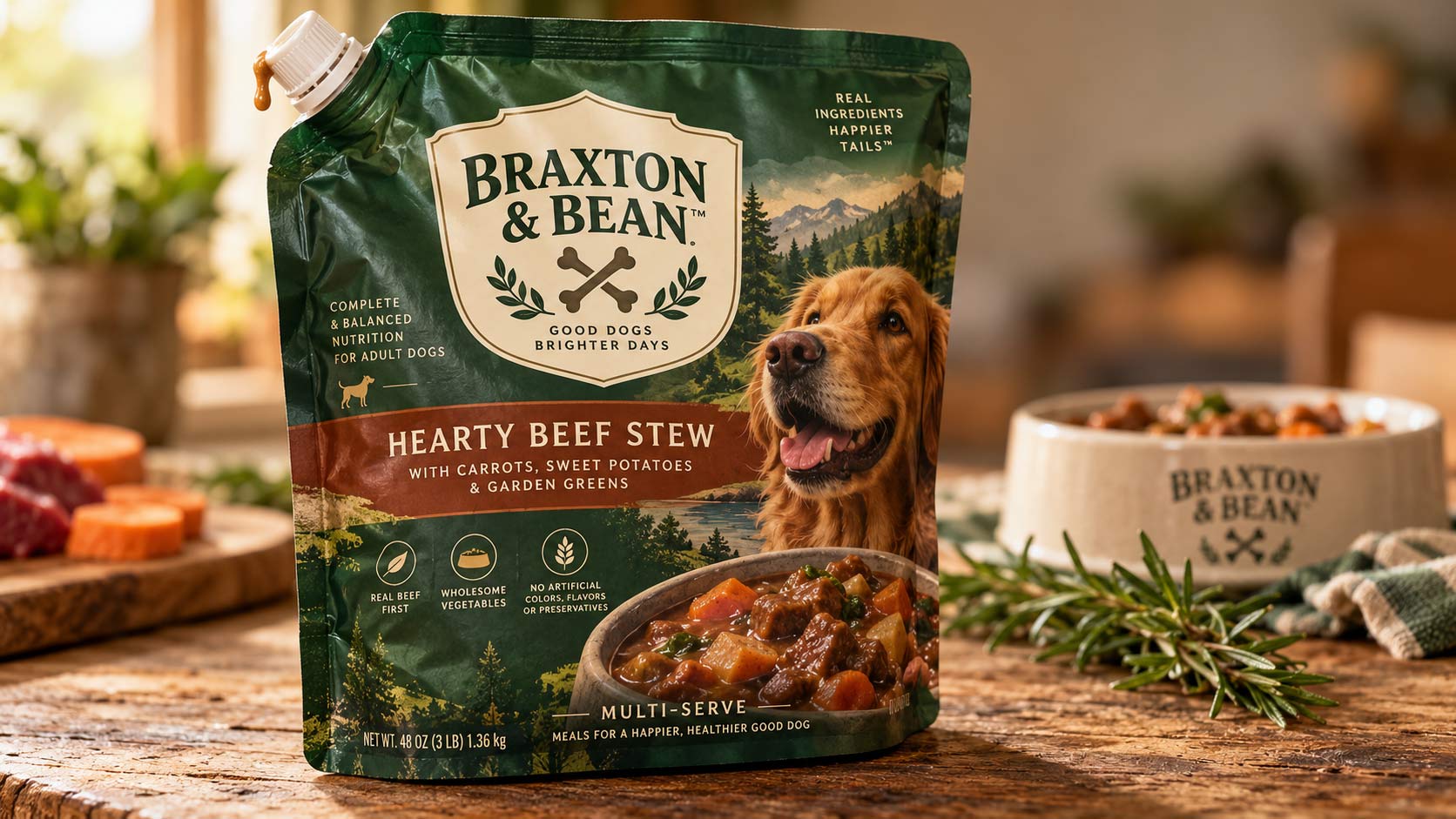
- A resealable closure or a spouted cap lets the owner pour or scoop a portion and seal the rest, which keeps the food fresh between meals.
- A spout suits pourable, gravy-style food, while a wide resealable opening suits thick, chunky, or pâté-style food that gets spooned out.
- Once a multi-serve pouch is open, most wet food needs to go in the fridge, so the package only has to protect it for a few days, not months.
Selling a Premium Meal Without a Window
Wet food has one shelf challenge that dry food does not. The foil that makes the package work is opaque, so you cannot cut a clear window to show the food the way a freeze-dried or raw brand can. That means the print has to carry the whole story.
- Lead with appetizing photography and clear flavor callouts, since the buyer cannot see the actual food through the foil.
- A matte or soft-touch finish makes a wet food pouch feel as premium as its price, which matters in a category full of lookalikes.
- Full color on a small run is easy with digital printing, so a new wet line can launch looking established without a huge first order.
Get the outside right and the foil stops being a limitation. It becomes a clean, premium canvas for the brand.
Wrapping It Up: Built for the Wet Stuff
Wet pet food hands you one of the harder packaging jobs in the store. The package has to hold a wet, rich, aromatic food, survive a cook that makes it shelf stable, open clean for a single serving or reseal for a bigger one, and still sell a premium meal through a foil wall. Start from the food and the way it is made, choose a retort pouch and a sealant that match it, and let the print do the selling. Do that, and every pouch reaches the bowl as fresh and appetizing as the day it left your line.
Ready to Create Packaging Your Pets (and Customers) Will Love?
Let's bring your brand to life.
Get Started Today