
Cat Food Packaging: Why a Cat Bag Is Not Just a Smaller Dog Bag
It is tempting to treat cat food packaging as dog food packaging in a smaller size. It is not. Cats eat differently, their food is richer and smellier, and the people who buy it shop differently too. Those differences change the bag, the pouch, and the whole shelf strategy.
Overview
Most of what gets written about pet food packaging is really about dog food, and it is easy to assume cat food is the same idea in a smaller bag. It is not, and treating it that way is how good cat brands end up with packaging that fights their product instead of helping it.
Cats eat in small, frequent amounts. Their food is richer, fattier, and far more aromatic than most dog food. And the person buying it tends to be a particular kind of shopper, attentive, a little fussy on their cat's behalf, and quick to switch brands if something seems off. All of that changes the packaging decisions: the size of the bag, how it reseals, how it holds aroma, and how it has to look on the shelf. This guide walks through what actually makes cat food packaging its own thing, and how to get it right whether you sell dry food, treats, or wet.
A Cat Bag Is Not a Shrunk-Down Dog Bag
The instinct is to take a dog food bag, scale it down, and call it cat food packaging. The shape might survive that, but almost nothing else does.
Cats eat a fraction of what a dog eats, so the whole size ladder shifts down and the bag gets opened and reclosed far more times relative to how much food it holds. Cat food is formulated to be intensely palatable, which means more fat and more aroma, both of which stress the packaging in ways dry dog kibble often does not. And cat owners buy into a brand's look and story more than they buy on bulk value, so the shelf presence has to work harder per square inch. None of these are small tweaks. Together they add up to a genuinely different packaging brief.
Smaller Portions Mean Smaller, Smarter Bags
Because cats eat so little at a time, cat food moves in smaller bags, and small bags are their own design problem, not just a big bag reduced on a copier.
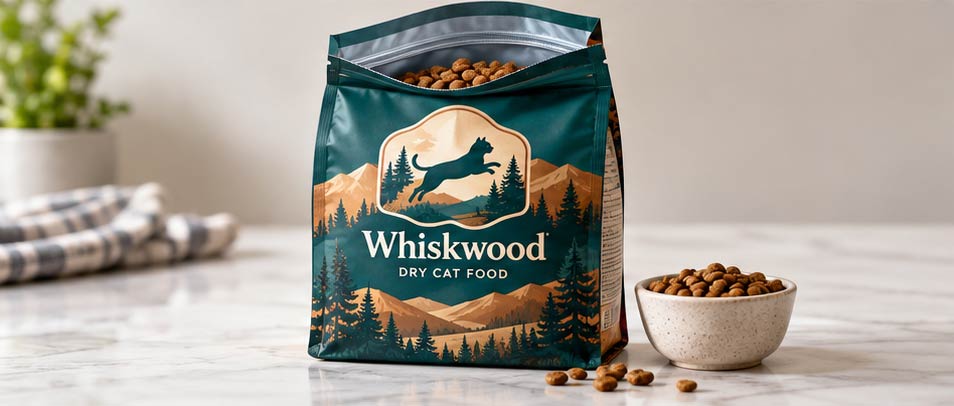
A smaller bag has less room for headspace, less surface for your branding, and a reseal that gets used much more often over the life of the bag. Getting the size right matters even more than it does for dog food, because a bag that is slightly too big looks half empty and a bag that is too small will not hold a sensible number of days of food. The same thinking we laid out in how pet food bag sizes work applies here, just compressed into a tighter range. If you sell a range, from a single-cat trial size up to a multi-cat household bag, plan the whole ladder at once so the family reads as one brand at every size.
Reseal and Freshness Matter More
Here is the thing every cat brand learns eventually: cats are ruthless about freshness. A cat that turned up its nose at yesterday's bowl is often reacting to food that went slightly stale or flat because the bag did not reseal well.
Dry cat food sits open in the bag for longer, relative to its volume, than most dog food does, because the cat eats through it slowly. That means the reseal is doing real work every single day, and a weak one lets aroma escape and air creep in until the food loses the smell that made the cat want it. A reliable resealable closure is not a nice-to-have on a cat bag, it is close to the whole point. Pocket zippers and good press-to-close tracks keep the food smelling like the cat expects, which is the difference between a bowl that gets eaten and one that gets walked away from.
Aroma and Grease Are the Real Engineering
Cat food is built around smell and fat, and those two things are exactly what punish a cheap bag.
The aroma that makes cat food appealing is volatile, which means it wants to escape, and the barrier that holds it in is the same barrier that keeps oxygen and moisture out. Lose the aroma and you lose the cat. At the same time, all that fat and palatant coating migrates, and on an underspecified bag it shows up as grease staining that makes a premium product look spoiled. We wrote about exactly this failure in the grease mark that comes from the inside, and cat food pushes harder on it than almost any dry dog food because it is so fat rich. The takeaway is simple: a cat bag earns its keep on barrier, holding good smells in and keeping stains and spoilage out, so that is where the spec should be strongest.
The Three Formats Cats Actually Need
Cat food really lives in three packaging formats, and a growing brand often needs all three at once.
- Dry food bags. The core format, a printed flexible kibble bag sized down for cats, with a strong barrier and a daily-use reseal.
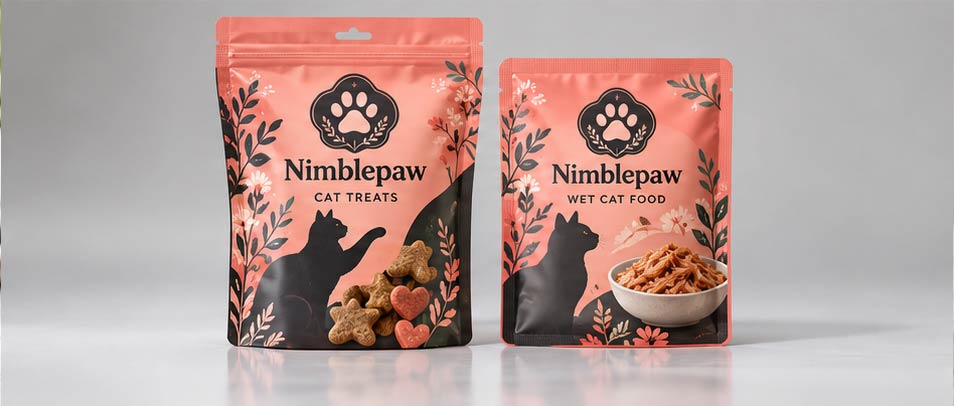
- Treat pouches. Cat treats are a huge, high-margin category, and they live in small resealable pouches where portion control, freshness, and shelf cuteness all matter. Our treat packaging approach fits cats as naturally as dogs.
- Wet food pouches. Single-serve wet and lickable formats are enormous in cat food, and a printed wet food pouch is a specialized build with its own barrier and seal demands, different from a dry bag, so it is worth treating as its own project rather than an afterthought.
Most cat brands start with one of these and add the others, so it helps to choose a look and a print approach that can carry across all three cleanly.
Shelf Appeal for the Cat Shopper
Cat owners are a distinct audience, and the shelf has to speak to them. They tend to respond to packaging that feels considered, a little premium, and clear about what is inside, whether that is a clinical health angle or a warm, characterful one.
This is where print quality and finish pay off, because a cat bag is small and it is competing up close, often picked up and turned over before it is bought. Crisp printing, a confident color system, and a finish that feels good in the hand do a lot of work in that moment. A custom printed cat food bag lets you own that shelf space with edge-to-edge branding rather than a label on a blank, and because the bags are small, the jump in perceived quality from a great print is especially noticeable.
Starting a Cat Brand Without a Huge First Order
A lot of cat brands begin small, a single recipe, a local following, an online shop, and assume custom packaging has to wait. It does not.
With digital printing you can order fully custom printed cat bags at a low minimum, test a recipe or a treat flavor, and reprint only the winners. If you want to prove the product before committing to custom print at all, stock bags with a label get you on the shelf quickly, and sustainable pet packaging options let a new cat brand match the values its customers care about from day one. The path from first batch to full custom line is shorter and cheaper than most new cat brands expect.
Wrapping It Up: Respect What Makes a Cat a Cat
Cat food packaging goes wrong when it is treated as dog food packaging scaled down, and it goes right when it respects how different the product, the pet, and the shopper really are. Cats eat small and often, so the bag runs smaller and reseals constantly. Their food lives and dies on aroma and fat, so the barrier has to be the strongest part of the package. And their owners buy with real attention, so the printing and the shelf presence have to earn that close look.
Get those three right, size the bag honestly, protect the smell, and make it look as good as the food deserves, and you end up with packaging a cat will happily eat from and an owner will happily buy again. That, in the end, is the only review that counts.
Ready to Create Packaging Your Pets (and Customers) Will Love?
Let's bring your brand to life.
Get Started Today