
This Order Does Not Match the Last One, and Both Are Correct
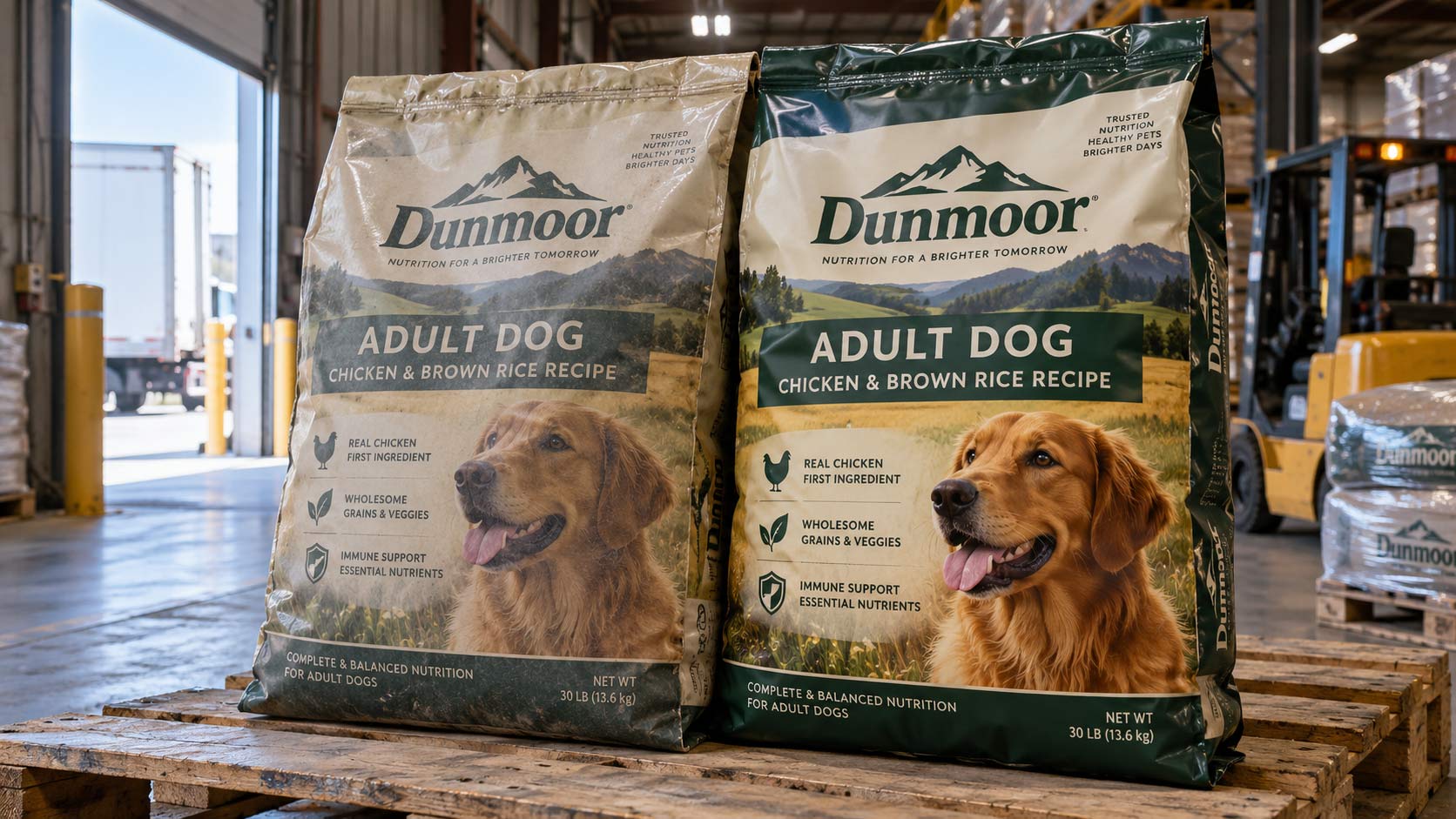
A new pallet lands, somebody sets a fresh bag next to one from the previous run, and the green is not quite the same green. It looks like a printing mistake. Usually both bags are inside the agreed tolerance, the older one has aged on a shelf, and the two are being compared under warehouse lighting that was never going to settle the question. Here is what actually varies, and how to judge it properly.
Overview
It usually happens at receiving. A new pallet comes in, somebody pulls a bag and sets it next to one from the last run still sitting in the racks, and the brand green is off. Not wildly, but enough that two bags side by side do not look like the same product. Somebody photographs them and the photo goes to the supplier.
This is one of the most common complaints in packaging and one of the most misunderstood. Most of the time nothing went wrong. Both bags are within the tolerance that was agreed, the older one is not the color it was when it arrived, and the comparison is being made in conditions that cannot answer the question. There are real color failures, and they are worth catching, but you cannot find them until you understand what normal variation looks like.
Color Is a Number With a Range Around It
The core misunderstanding is that "match" means identical. In production printing it never has.
A color standard is a measured value plus a tolerance, which is the agreed amount of variation either side that still counts as correct. Printers work to that range because hitting one exact value on every impression of every run is not physically achievable. Two bags can sit at opposite ends of that range, both be entirely correct, and still look slightly different when you hold them against each other.
That is not a loophole or an excuse. It is how color is specified in every printing process there is. The useful question is never "do these look identical," it is "are both of these inside the range we agreed," and that question needs a measurement, not an opinion.
What Genuinely Varies Between Runs
Several things move between one order and the next, and none of them indicate a problem.
- The substrate lot. Film and laminate have their own slight color and opacity variation batch to batch, and every ink printed on top of them inherits it.
- The ink batch. Mixed pigment behaves very slightly differently from one batch to another.
- Press conditions. Speed, temperature, humidity and ink viscosity all shift the amount of ink laid down.
- How the colors stack. The order and density of each layer affects the final appearance, particularly on anything with an opaque white behind it.
- Time since printing. Ink continues to settle for a period after a run, so a bag measured fresh off the press and the same bag measured later are not identical.
Any one of those is small. Several of them landing the same direction on one run and the other direction on the next is enough to be visible to a person holding two bags.
You Are Probably Comparing Against the Wrong Thing
This is the part that resolves most disputes, and it has nothing to do with the press.
The bag you are comparing against has been alive. It has sat under warehouse or retail lighting, possibly near a window, through whatever temperature the building does. Light fades ink, and some pigments fade faster than others, so the shift is rarely even across the whole design. On a pet food bag there is a second factor, because fat on the exterior of bags changes how the surface reflects light, which is part of why grease resistance matters for more than appearance.
So the older bag is not a reference. It is a used sample that has drifted in an uncontrolled way. Measuring a brand new bag against it tells you about the old bag at least as much as the new one.
Then there is the lighting. Warehouse fixtures, daylight through a dock door and retail LEDs all render color differently, and two bags judged under one of them can look matched while looking clearly different under another. That effect has a name, metamerism, and it is why color decisions get made in controlled lighting rather than wherever the pallet happened to land.
How to Settle It Properly
The whole thing becomes manageable with a small amount of discipline set up once.
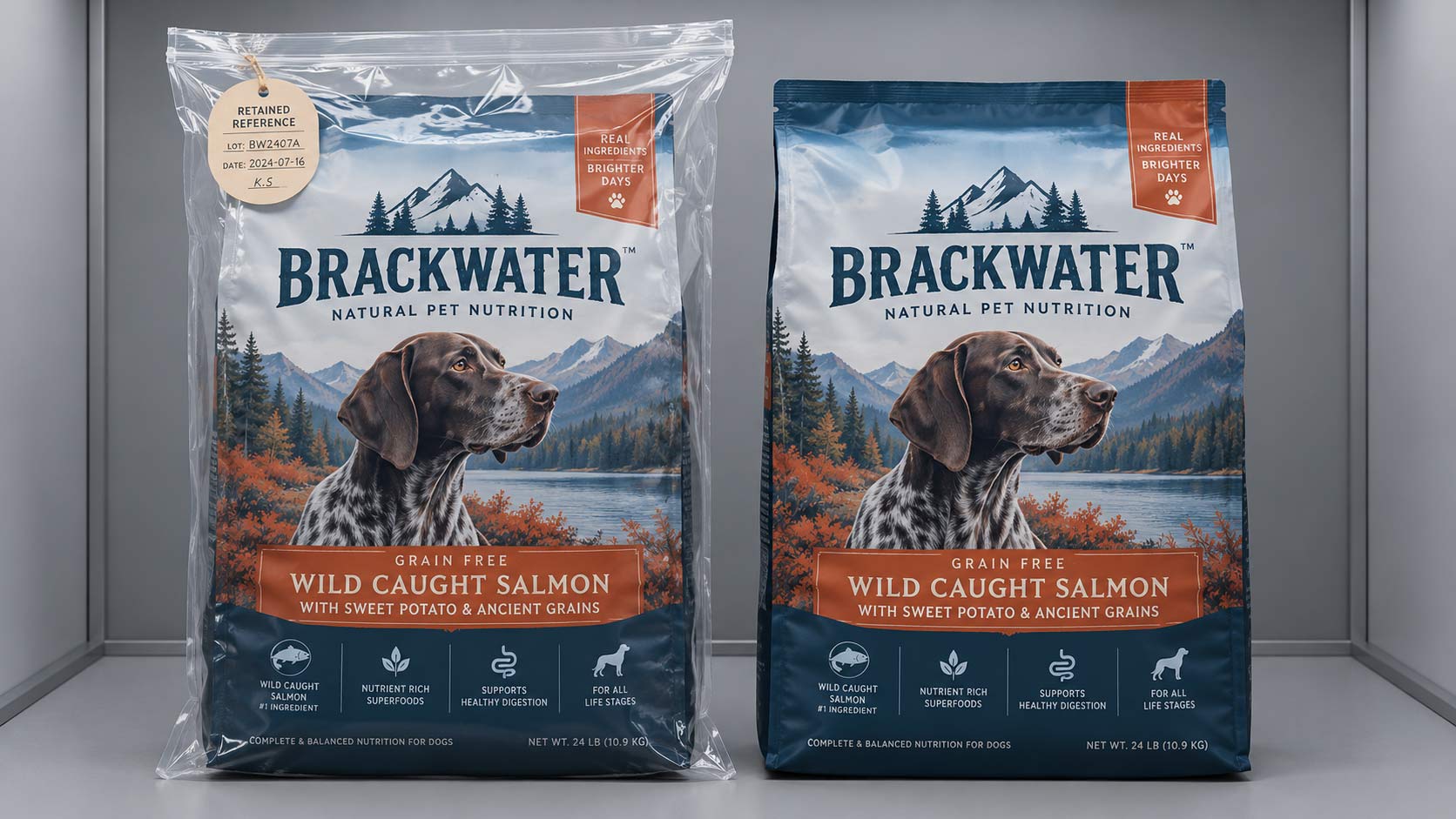
- Keep a sealed, dated retained master. One bag from an approved run, stored in the dark, never used for anything else. That is your reference, not whatever is in the racks.
- Agree the standard and the tolerance up front, in writing, before the first production run rather than during the second.
- Judge under consistent lighting. The same light source every time, ideally a controlled one. Never a phone photo, which applies its own color processing.
- Approve from a printed sample on the real substrate. A screen and a digital proof cannot tell you what an ink will do on your actual film.
- Reorder sizes together where you can. Bags printed in the same window match each other far more closely than bags printed months apart.
If you are setting up a new program, this is the moment to do it. A full custom pet food bag specification can carry the color standard and tolerance in it, so there is a single agreed reference rather than an argument later.
Print Method Changes the Conversation
It is worth knowing that how your bags are printed affects how consistent reorders are.
Rotogravure uses engraved cylinders, so once they exist they reproduce the same image run after run with very little drift. That consistency is a genuine argument for gravure on a high volume product where color is critical to the brand. Digital printing goes from file to press with no cylinder at all, which means no plate wear and an identical file every time, and it is what makes short runs and many SKUs affordable in the first place.
Neither is a problem. They simply have different consistency characteristics, and if exact color across years of reorders is near the top of your priority list, that belongs in the conversation when you choose, which our post on stock versus custom touches on from the cost side.
When It Really Is Wrong
None of this means you should accept whatever arrives.
A real failure looks different from normal variation. It is outside the agreed tolerance when measured, not just different to the eye. It often affects one color far more than the others, or shows up as a shift across a single bag rather than between bags. It can appear as mottling, streaking or banding rather than an even difference. And it will usually be obvious against a properly stored retained master rather than needing a careful squint.
If you have a retained master, a stated tolerance and consistent lighting, that conversation takes ten minutes and ends with a measurement. Without them it becomes two people holding bags up to a window and disagreeing.
Wrapping It Up: Keep One Bag in the Dark
The single most useful thing you can do about packaging color costs nothing and takes a minute. When a run is approved, seal one bag, write the date on it, and put it somewhere dark where nobody will grab it for a photoshoot. That bag is now the only honest reference you own.
Everything else follows from it. You can tell real drift from normal variation, you can tell a new bag from a faded one, and when something genuinely is off you can prove it instead of describing it. Pair that with an agreed tolerance and one consistent light to look under, and a complaint that used to take a week of emails becomes a measurement somebody takes before lunch.
Ready to Create Packaging Your Pets (and Customers) Will Love?
Let's bring your brand to life.
Get Started Today