
Stock Bags or Custom Printed? The First Packaging Call a New Pet Brand Makes
Your first bags come down to a fork in the road. You can buy stock bags and add a printed label, or you can order custom printed bags with your art on the film. Both are real choices made by real brands, and the right one depends less on taste than on what stage your brand is actually at.
Overview
Every new pet brand hits the same fork in the road with its first order. You can buy stock bags, the blank pre-made pouches that come in standard sizes, and add a printed label with your brand on it. Or you can order custom printed bags, where your artwork is printed right onto the film and the whole bag is yours from edge to edge.
Both are real choices that real brands make, and neither one is the beginner option or the serious option. The right call depends less on taste than on where your brand actually is. The short version is this: stock bags fit a brand that is testing, moving in low volume, watching its budget, and still changing its look, while custom printed fits a brand with a settled identity, proven sellers, and enough volume to earn the shelf presence. This guide walks through the real differences so you can tell which one fits you right now.
What a Stock Bag Actually Is
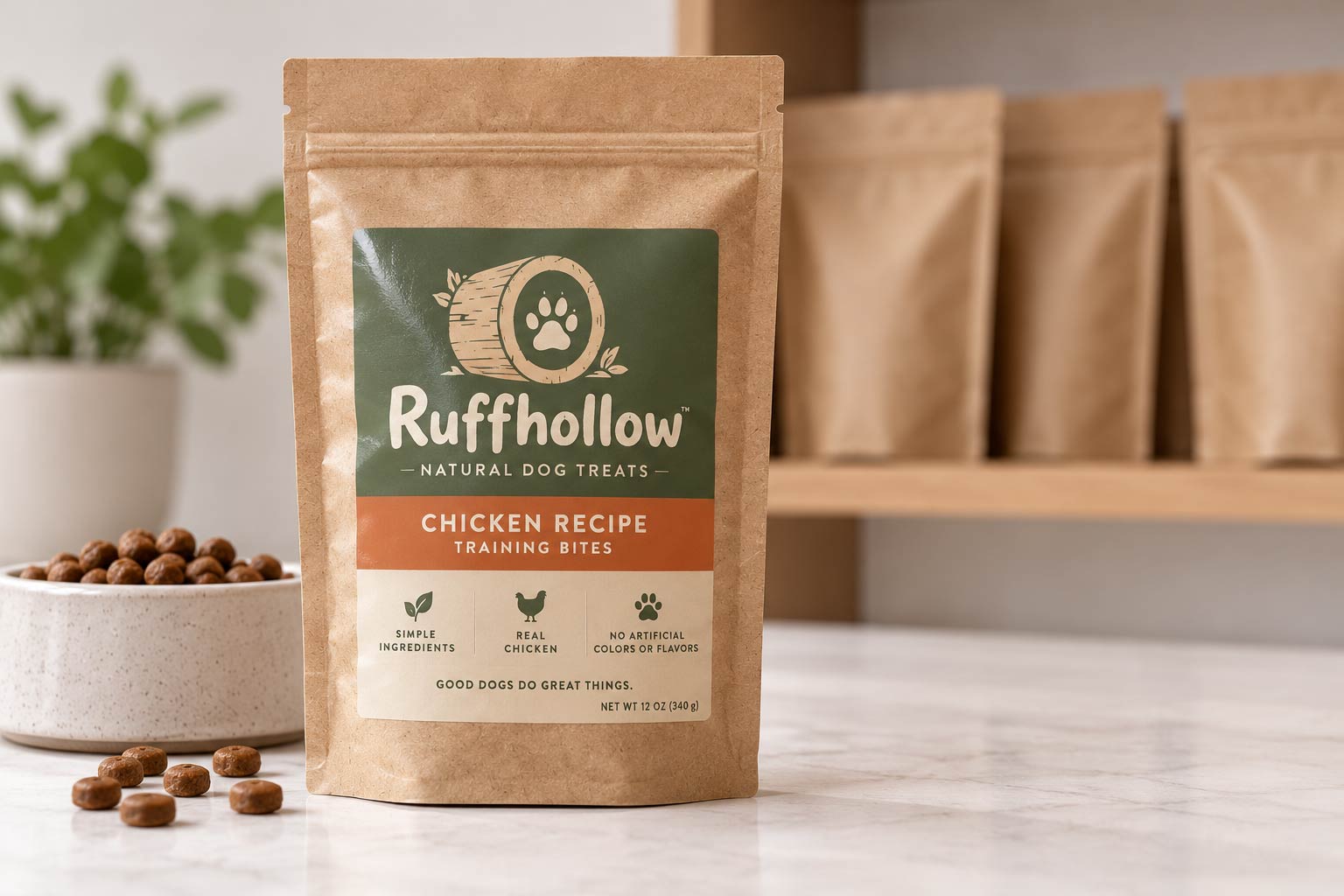
A stock bag is a finished, unprinted bag that already exists before you place your order. A manufacturer makes them in large quantities in standard sizes and materials, kraft, matte white, black, or clear, often with a zipper and sometimes a valve already built in. You buy them by the box, off the shelf, and brand them yourself with a printed label.
The appeal is that almost everything is already done for you. There is no printing setup, no plates, no minimum run of thousands. You can order a modest quantity, apply your label, and have sellable product this month. For a brand pouring its money into the actual food, that speed and low commitment is the whole point. Our stock bags come ready for exactly this, so you can get a recipe to market while the brand is still finding its feet.
What Custom Printed Means
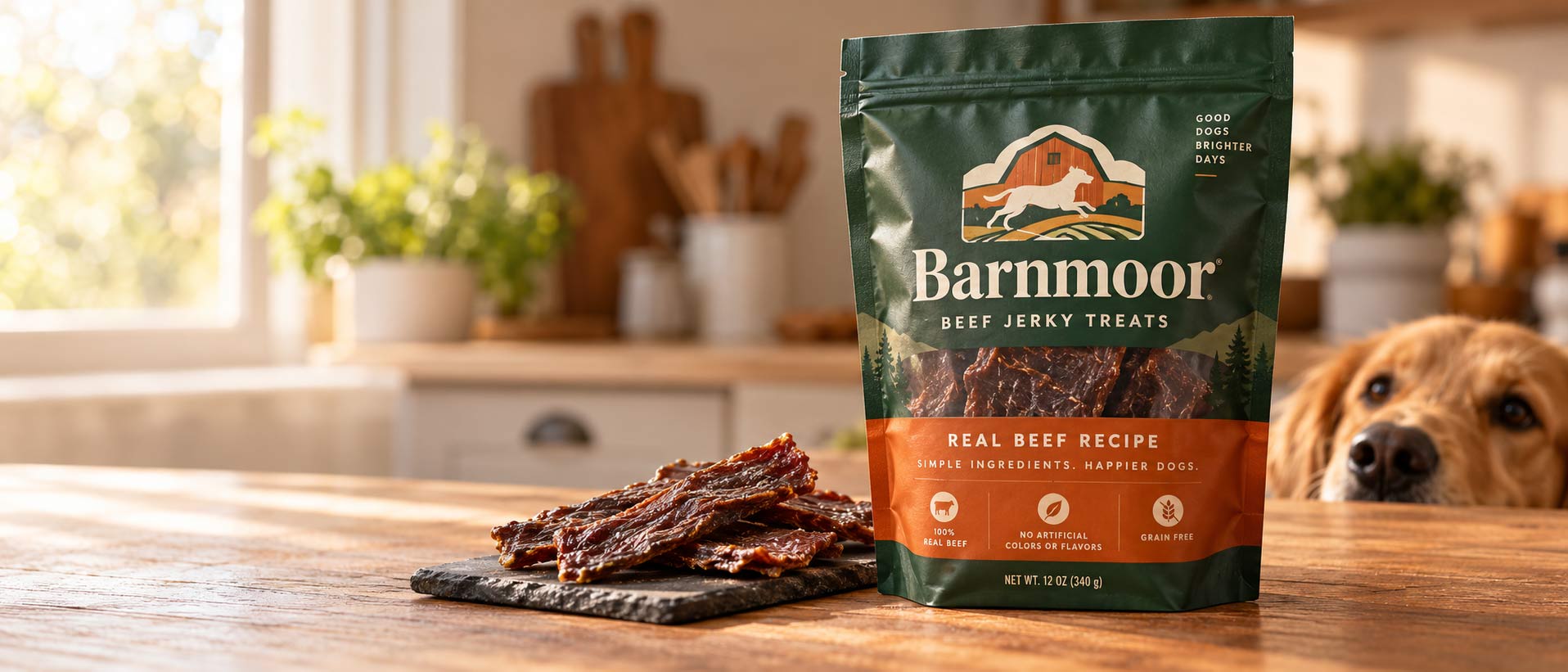
A custom printed bag is the opposite approach. Instead of starting from a blank, your design is printed directly onto the film, so the color runs to every edge, the finish is yours, and there is no label sitting on top of the bag because the bag itself is the artwork.
This is what most people picture when they imagine a premium pet food bag on a shelf. It looks intentional because it is. A custom pet food bag can be built in your own size, your own shape, and your own finish, with the brand baked into the material rather than stuck on afterward. The trade is that printing has a setup and a minimum, so it asks for more money and more commitment up front than a box of blanks does.
The Trade-offs, Side by Side
The decision usually comes down to five things, and it helps to see them lined up rather than argued one at a time.
- Upfront cost. Stock bags are cheap to start, because you are only buying bags and labels. Custom printing costs more on the first order, because you are paying for the print run as well.
- Cost per bag at volume. This flips as you scale. Labels add a cost to every single stock bag forever, while custom print gets cheaper per bag the more you order.
- Minimum order. Stock can be bought in small quantities, sometimes by the box. Custom printed has a real minimum, as low as 500 bags per design with digital printing and much higher with rotogravure.
- Speed to shelf. Stock is fast, because the bag already exists and you are only adding a label. Custom printing takes longer, because the bag has to be printed and made.
- Shelf presence. Custom wins here, plainly. A full-bleed printed bag reads as a brand, while a label on a blank, however nice, often still reads as a label.
None of these make one option correct. They just tell you what you are trading for what, which is the only honest way to make the call.
When a Stock Bag Is the Right Call
Stock bags are the right starting point far more often than new brands expect, and reaching for them early is a sign of good judgment, not a lack of ambition.
They fit when you are still testing recipes and do not want to commit thousands of bags to a flavor that might not make the lineup. They fit when you are selling at farmers markets, online, or in a handful of local shops, where the volume simply is not there to justify a print run yet. They fit when the budget needs to go into the food, the vet work, and the first batches rather than into packaging inventory. And they fit when your branding is still moving, because a label is easy and cheap to reprint when a stock bag lets you change the look between orders without stranding a pallet of printed film you can no longer use.
In all of those cases, stock is not a compromise. It is the tool that keeps you flexible and liquid while you learn what your brand is.
When It Is Time to Go Custom
The signs that you have outgrown stock are usually clear once you know to look for them.
You have one or two recipes that reliably sell, so the risk of committing a print run has dropped. You are moving into real retail, where the shelf is crowded and a label on a blank gets lost next to brands that printed their bags. Your order volume has climbed to where custom printing is actually cheaper per bag than stock plus labels, which happens sooner than many brands realize. Or you simply want the premium, finished look that you cannot get by applying a label, because the brand is ready to look the part. When two or three of those are true at once, the math and the shelf are both telling you the same thing.
You Do Not Have to Pick Just One
The most common mistake is treating this as a permanent, all-or-nothing choice. It almost never is.
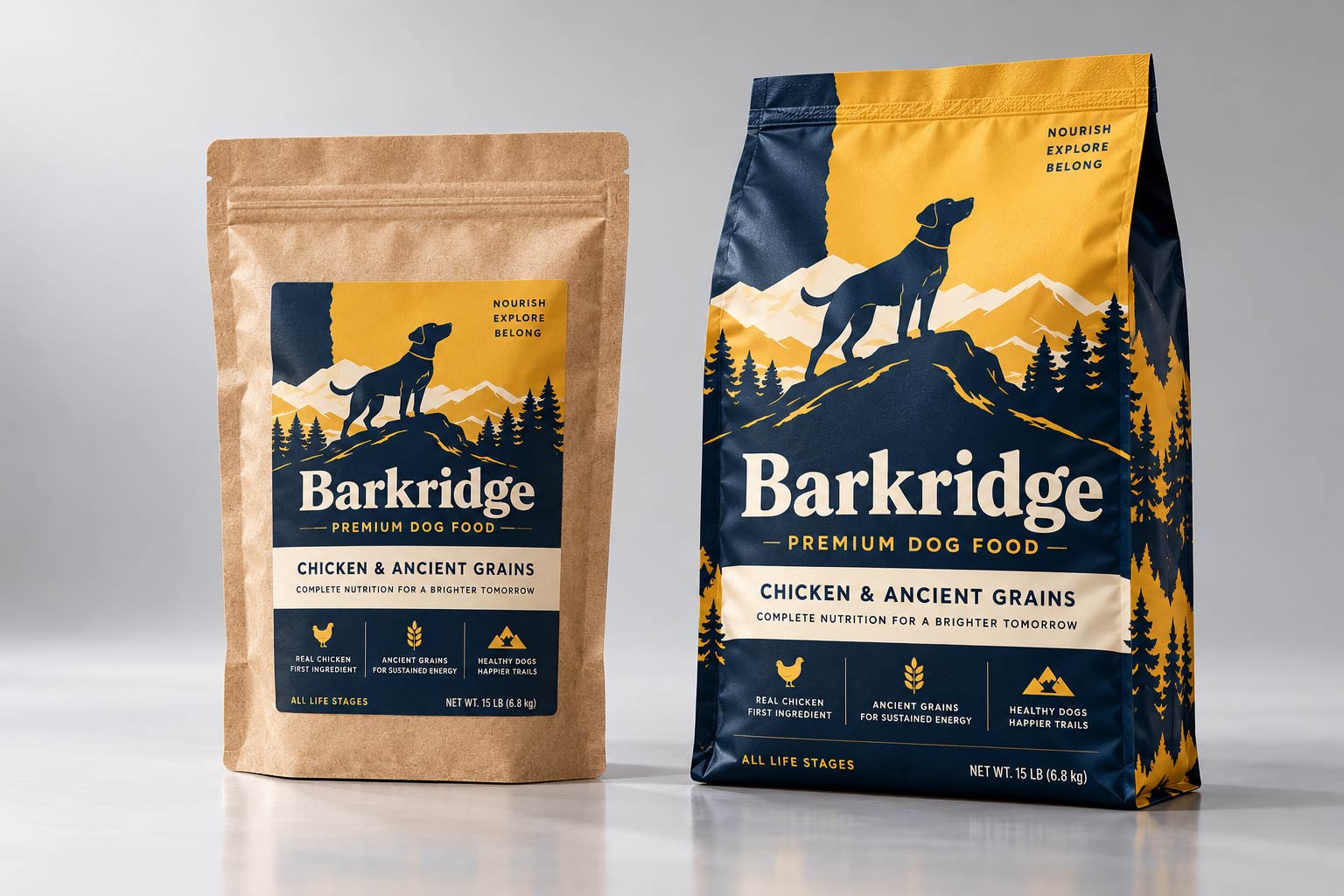
A brand that is scaling well usually runs both at once. The hero SKU, the flavor that sells the most and defines the brand, graduates to a custom printed bag first, because it earns the shelf presence and moves the volume that makes printing pay. Meanwhile new flavors, seasonal runs, and slow movers stay on stock bags with labels, so you can keep testing without committing a print run to every idea. As each new recipe proves itself, it graduates too. The question is rarely stock or custom for the whole line. It is which products are ready for custom yet.
A Few Pet-Specific Catches
Pet food adds a couple of wrinkles that food and coffee brands do not always face, and they are worth knowing before you order either way.
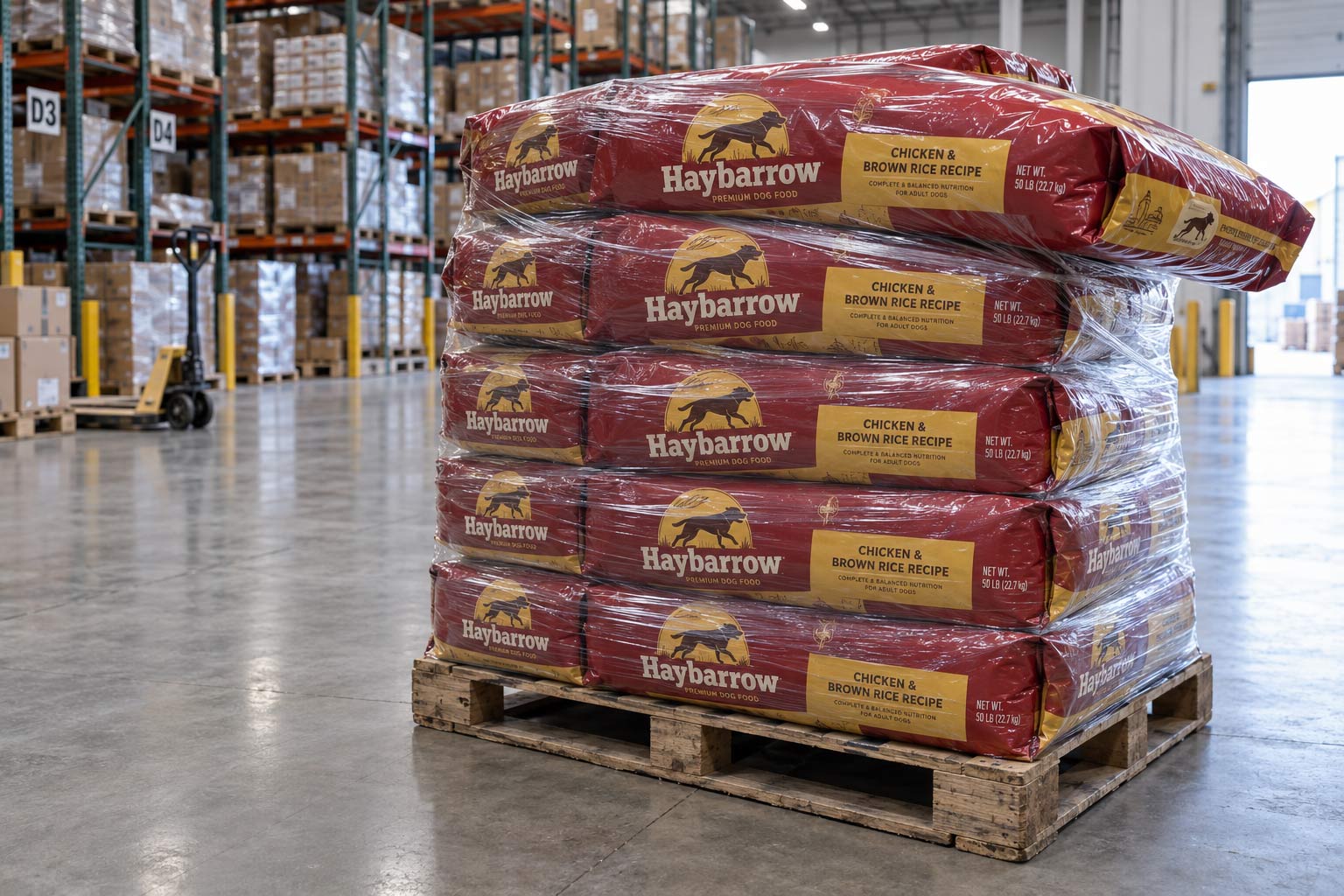
Dry food gets heavy, and a large kibble bag puts real weight on the film and the seals. Stock bags come in set sizes and gauges, so once your fill weight climbs you may find the stock options run out before your product does, which pushes you toward a custom build sooner. High-fat foods bring their own issue, because fat migrates and can stain a bag from the inside, as we covered in the grease mark post, so the barrier matters whichever route you take. And bag size is its own decision regardless of print method, which is why it is worth reading how we think about bag sizes before you lock in either a stock order or a print run.
Wrapping It Up: Pick the Stage, Not the Status
Stock bags and custom printing are not the amateur move and the professional move. They are two tools for two different moments, and plenty of strong brands use both on the same shelf.
If you are testing, moving small volumes, watching the budget, or still shaping the look, stock bags with a good label keep you fast and flexible while you learn. If you have proven sellers, real retail, and the volume to back it, custom printing gives you a bag that owns the shelf. Be honest about which of those describes you today, start there, and let your product, not your pride, tell you when it is time to graduate.
Ready to Create Packaging Your Pets (and Customers) Will Love?
Let's bring your brand to life.
Get Started Today