
If the Lot Code Rubs Off, the Recall Gets Bigger
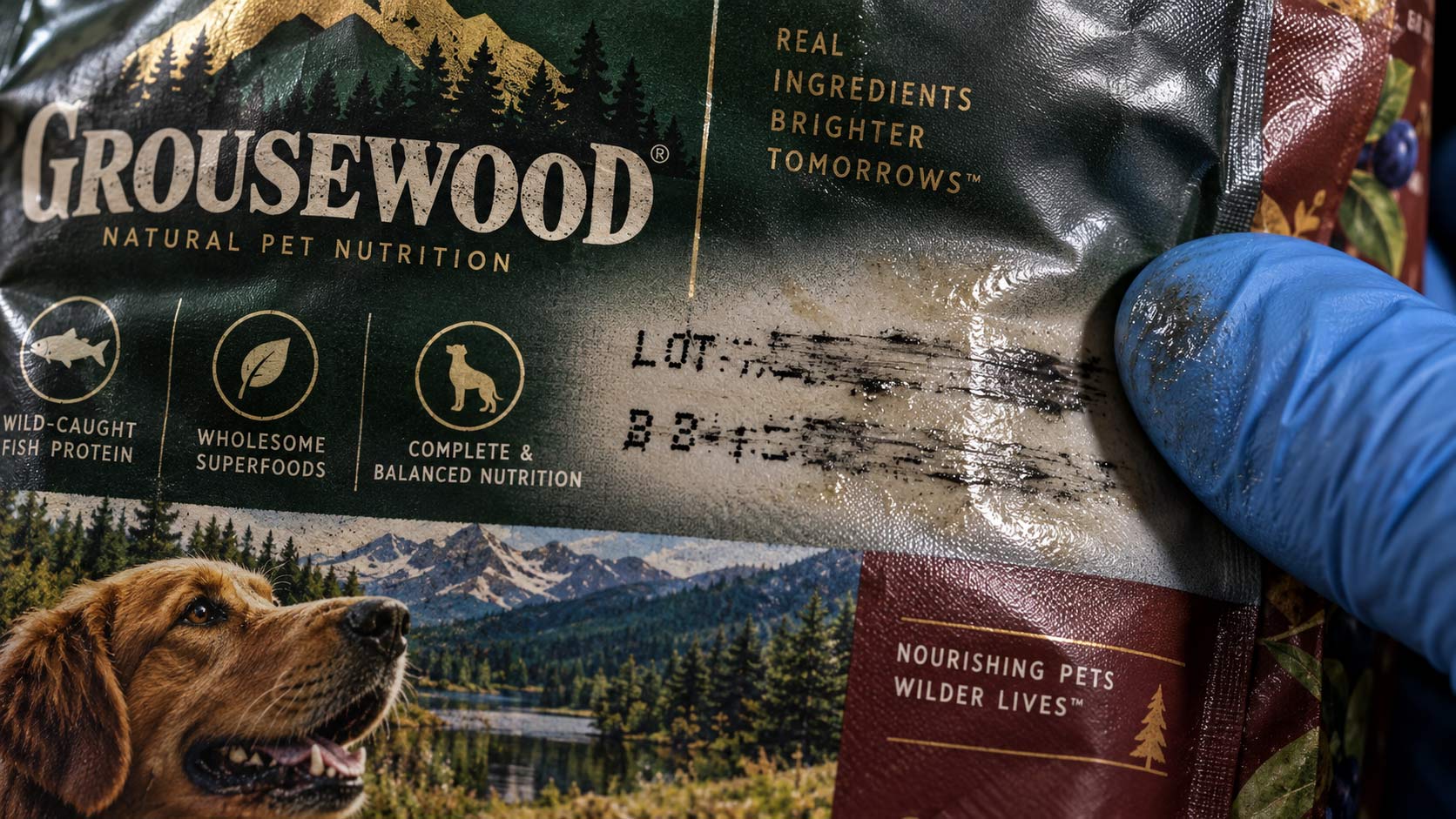
Everything on your bag was printed months ago by the people who made it. The lot code was not. That goes on in your own facility, seconds before the bag ships, as ink sitting on top of a surface built to repel things. Then it travels in a case full of greasy bags. When it rubs off, you have not lost a bit of small print. You have lost the only thing that lets you prove which bags are affected.
Overview
Look at a bag of pet food and almost everything on it was decided and printed long before the food existed. The artwork, the ingredient panel, the feeding guide, the barcode. All of it went onto film at a converting plant, probably months earlier, and it is sealed into the structure where nothing can touch it.
Then there is the lot code. That one small line of characters is different from everything else on the bag in every way that matters. It is added in your facility, on your line, usually seconds before the bag goes into a case. It is applied on top of a finished surface rather than built into it. And it is the only marking on the package that tells you which batch of food is inside, which makes it the single most important thing printed on the bag the day something goes wrong.
It is also, by a wide margin, the thing most likely to disappear before anyone needs to read it.
Why Film Fights the Ink
The problem starts with what you are printing on.
Paper absorbs ink. A code sprayed onto a paper carton soaks in slightly, grips the fibers, and dries into the material. Film does the opposite. A finished laminate is smooth, non-absorbent, and deliberately low energy at the surface, because that is what makes it a good barrier and what keeps things from sticking to it. Ink hitting that surface has nothing to soak into and very little to grab. It sits on top as a thin deposit and dries there.
That means the bond is entirely between the ink and the outermost skin of the bag. Anything that attacks that skin, or simply abrades it, takes the code with it. The characters are not damaged so much as removed.
This is also why a code that looks perfect leaving your line can be unreadable two weeks later. Nothing failed at the moment of printing. The ink was never anchored to begin with.
Pet Food Makes It Considerably Worse
Most products would give that ink an easy life. Pet food does not.
Dry pet food is coated in fat, and fat does not politely stay inside the bag. It is on the kibble, it gets on hands, it gets on the outside of bags during filling and handling, and over time it migrates into and through packaging materials, which is the subject of our post on grease resistance. Oils and fats are solvents for a lot of coding inks. A film of grease across a coded area will soften and lift characters that would have survived anything dry.
Add the physical reality of how these bags travel. They are heavy, they are stacked, and they rub against each other for the whole trip. That same abrasion we covered in why dropped bags burst is working continuously on every surface of every bag, including the two square inches carrying your traceability.
- Fat on the bag exterior, dissolving or softening the ink
- Bag on bag abrasion through an entire distribution run
- Handling, especially by people whose hands are greasy from the product
- Coding over varnish or gloss, where the surface is even slicker
- Moisture and condensation, which lifts marginal ink straight off
- Codes placed on folds and corners, where the wear is concentrated
What It Actually Costs You
This is where a small print problem turns into a serious business problem, and it is worth being blunt about.
A lot code exists so that you can draw a line around a problem. If a batch of food has an issue, the code is how you say with confidence that these specific bags are involved and all the others are not. It is the difference between pulling back one production run and pulling back everything you have shipped in a window.
When the codes in the field cannot be read, that line cannot be drawn. You cannot prove which bags are affected, retailers cannot sort their shelves, and customers cannot check the bag in their garage. Everyone has to assume the worst, and the scope expands to cover every possibility. The same thing happens in miniature with ordinary customer complaints: without a readable code you cannot trace a single bad bag back to a run, so you learn nothing from it.
There is also a quieter cost. Distributors and retailers increasingly check for legible coding at receiving, and an unreadable code can get a pallet rejected before it ever reaches a shelf.
Designing a Coding Area That Survives
Almost all of this is solved at the dieline stage, which is to say before the bag is made, not after it starts failing.
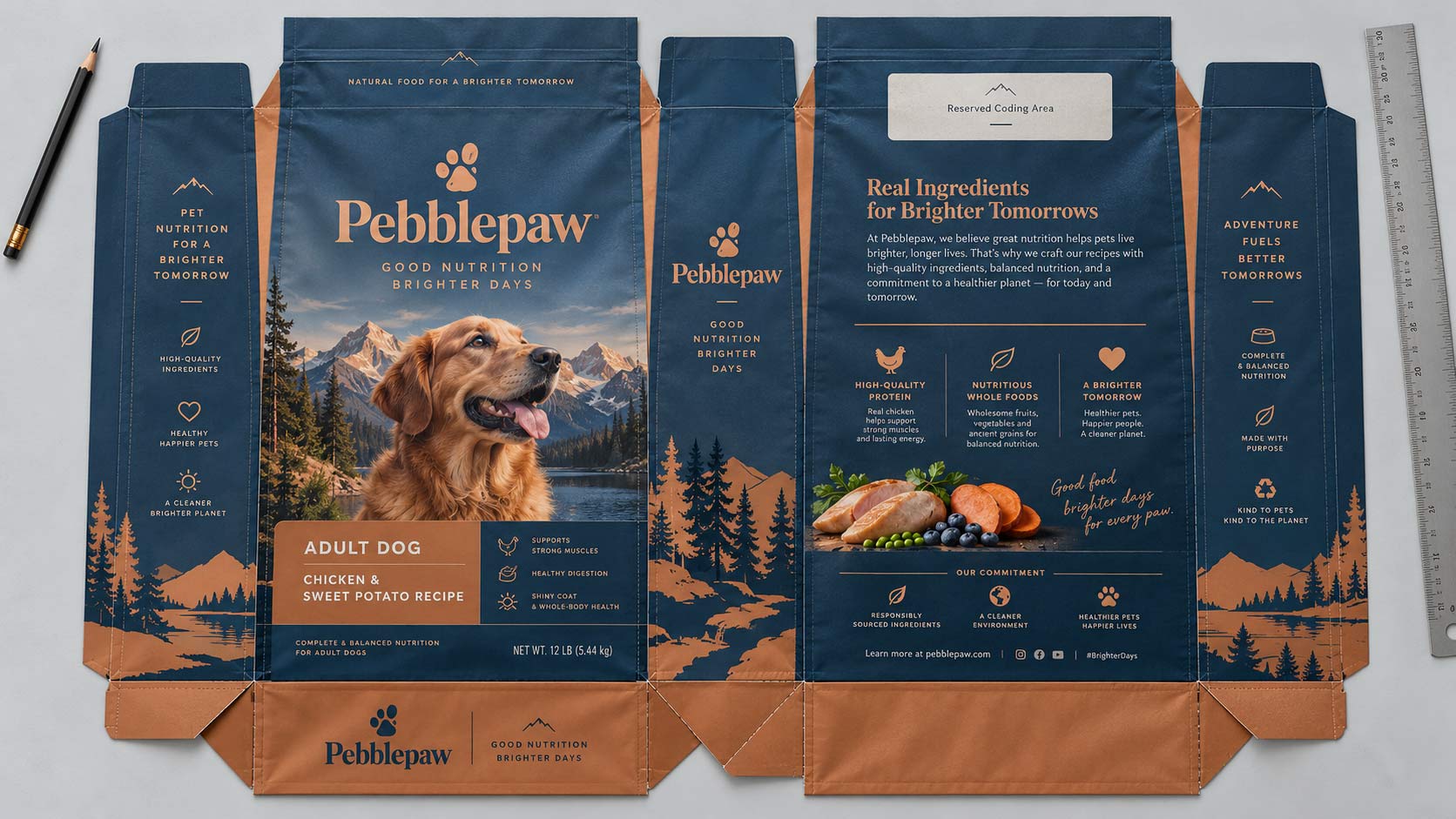
- Reserve the space in the artwork. Leave a defined area for the code rather than letting it land wherever there is room on press day.
- Keep it matte and uncoated. Code onto a plain, unvarnished patch. A glossy or heavily coated surface is the worst possible target.
- Choose a light background. Contrast is half of legibility, and a code on a dark saturated panel is hard to read even when it is intact.
- Place it away from wear. Up on a flat panel, not on a bottom corner, a gusset fold, or anywhere the bag rubs its neighbors.
- Match the ink to the substrate. Coding inks are formulated for different surfaces, and a film-rated ink is not optional on a laminate.
- Consider laser coding where the structure allows it, since a marked surface cannot be wiped away the way a deposit can.
If you are specifying new custom pet food bags or moving up into larger kibble bags, raise coding at the same time as the artwork. It costs nothing to leave a clean patch in a layout and it is expensive to retrofit.
Test It Where It Fails, Not Where It Prints
The standard check is to look at the code as the bag comes off the line, confirm it is crisp, and move on. That check tells you almost nothing, because the code has not met its enemies yet.
Test it after the conditions that actually remove it. Rub a coded bag firmly with a gloved thumb. Wipe one with a cloth that has product oil on it. Pull a bag out of a case that has been through a real delivery and look at it then. If you ship long distances, have someone at the far end photograph a code on arrival. Any of those will find a weak code weeks before a recall would.
And keep retained samples with their codes recorded separately, on paper or in your system, so that even if a bag in the field becomes unreadable you still hold the record of what shipped when.
Wrapping It Up: The Smallest Print Does the Biggest Job
Everything else on a pet food bag is working to sell the product or protect it. The lot code is the only thing on there working for the day something goes wrong, and it is the one marking that was added last, applied to a surface designed to shed things, and then sent out to be rubbed by greasy hands and neighboring bags for a week.
Give it a clean matte patch in the artwork, put it somewhere that does not take abrasion, use an ink meant for film, and test it after a real trip rather than at the printer. It is a few minutes of attention at the dieline stage, and the day you need that code to be readable, it will be the only thing standing between a narrow problem and a very wide one.
Ready to Create Packaging Your Pets (and Customers) Will Love?
Let's bring your brand to life.
Get Started Today