
Nobody Tore That Bag. It Was Dropped.
A heavy kibble bag that bursts along the bottom almost never failed because the film was thin. It failed because it was dropped, and a dropped bag is not carrying its own weight anymore. It is carrying all of that weight arriving at once, concentrated on the folds at the base. Here is why the bottom goes first, why it looks like a defect, and what actually makes a bag survive the floor.
Overview
Somewhere between your filling line and a customer's garage, a bag of kibble hits the floor. Most of the time nothing happens. Occasionally the bottom opens up and thirty pounds of food goes across the concrete, and the conversation that follows is always the same one. The bag must have been defective. The film must be too thin. Somebody should talk to the supplier.
Usually the bag was fine. What people underestimate is how violent a short drop actually is for a heavy, loosely packed product, and how completely that violence concentrates on one part of the bag. Understanding that changes both what you specify and how you handle full pallets, and it is the difference between an occasional annoyance and a recurring one.
A Drop Is Not About Weight. It Is About Stopping.
A full bag sitting on a shelf puts a steady, predictable load on its own base. The bag was built for that, and it will hold it indefinitely.
A dropped bag is a completely different event. Falling from even waist height, the bag picks up speed, and then the floor stops it in a tiny fraction of a second. All the energy it gathered on the way down has to go somewhere in that instant, and it goes into the structure of the bag. The shorter the stop, the bigger the force, which is why the same drop onto concrete is far worse than onto a pallet, a rubber mat, or another bag.
That is the part people miss. The failure has very little to do with how much the bag weighs sitting still. It has everything to do with how fast it went from moving to not moving.
The Kibble Makes It Worse
A bag of dry pet food is not a solid block. It is thousands of loose pieces with air between them, and in the moment of impact that mass behaves a lot more like a liquid than a brick.
When the bag lands, the kibble keeps moving for an instant after the bottom has stopped. It surges downward and outward, slams into the base, and pushes hard against the sides from the inside. The bag is not just absorbing an impact from below, it is being pressurized from within at the same moment. A partly full bag is often worse than a completely full one, because the product has room to build up speed before it hits the bottom.
This is also why the damage so rarely appears where the bag actually struck the floor. The impact point is the trigger. The failure happens wherever the structure is weakest.
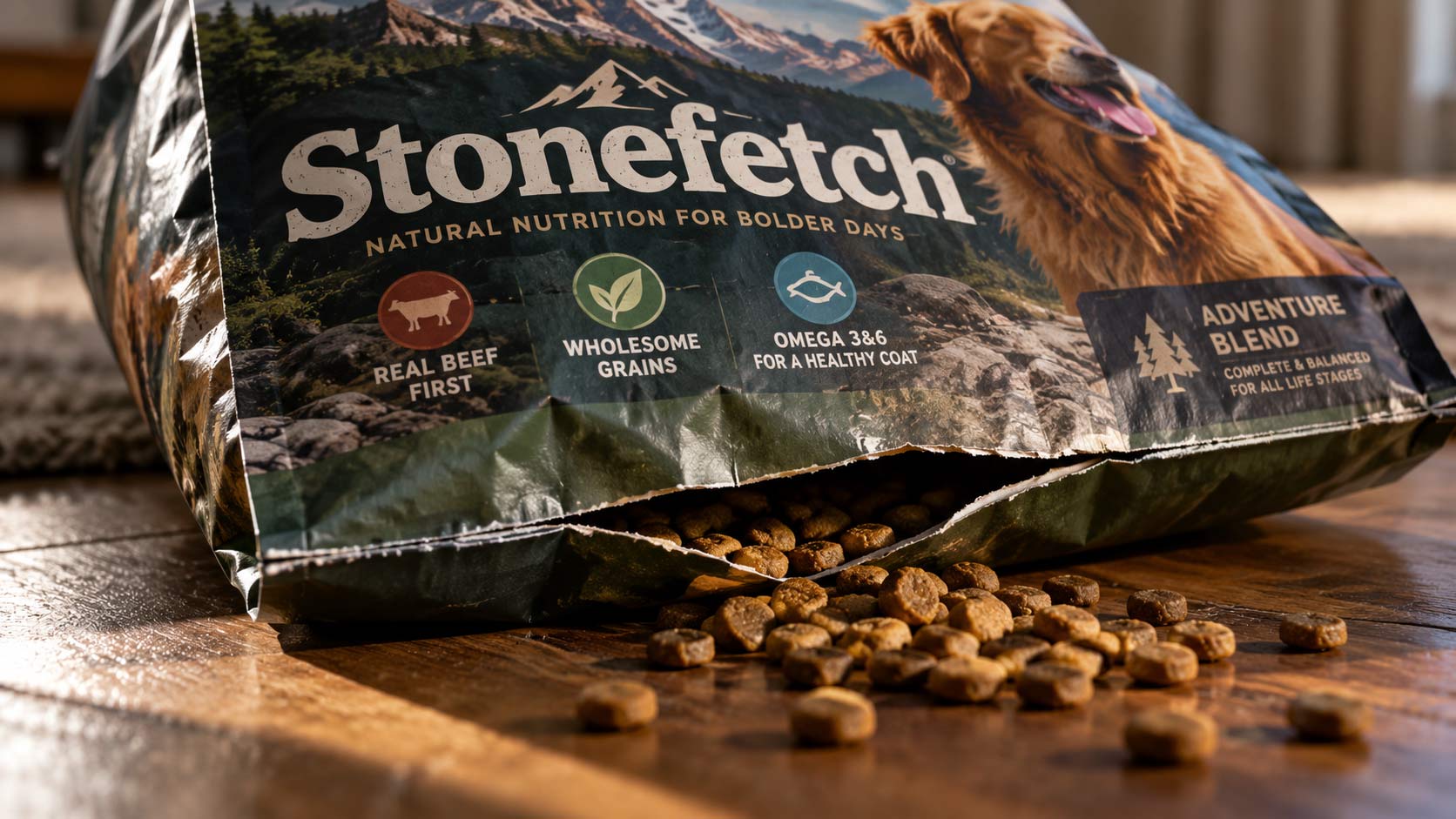
Why the Bottom Goes First
The base of a bag is the most worked part of the whole package, and it is where several stresses meet.
- Folded film is thinner and already strained. A gusset is a permanent crease, and a crease is a weak line waiting for a reason.
- Folds and seals intersect there. The bottom corners stack several layers and several seals in one small area.
- That is where the product lands. All the internal surge arrives at the base first.
- It is the last thing sealed. On many constructions the bottom carries the most recent and most complex sealing of the whole bag.
- It takes every previous knock. Bags get set down hard dozens of times before the one that finally opens them.
That last point matters more than people expect. A bag rarely fails on its first rough landing. It fails on the tenth, after small damage has accumulated along a fold where nobody was looking.
Why It Looks Exactly Like a Defect
The evidence is genuinely confusing, which is why this argument happens so often.
A burst bottom looks like a seal that let go, because that is literally what you are holding. The bags around it in the same case are perfectly fine, which seems to prove the problem was with that one bag rather than with how it was handled. Nobody saw it fall, or if they did it was a drop so ordinary that it did not register as an event. And the bag that failed is now in pieces, so there is no way to test what it would have survived.
Meanwhile the real cause left no trace at all. A bag that was dropped twice last week and once today looks identical to one that was never dropped, right up until it does not.
What Actually Makes a Bag Survive the Floor
Some of this is specification and some of it is handling, and the specification side is worth getting right before you scale up a size.
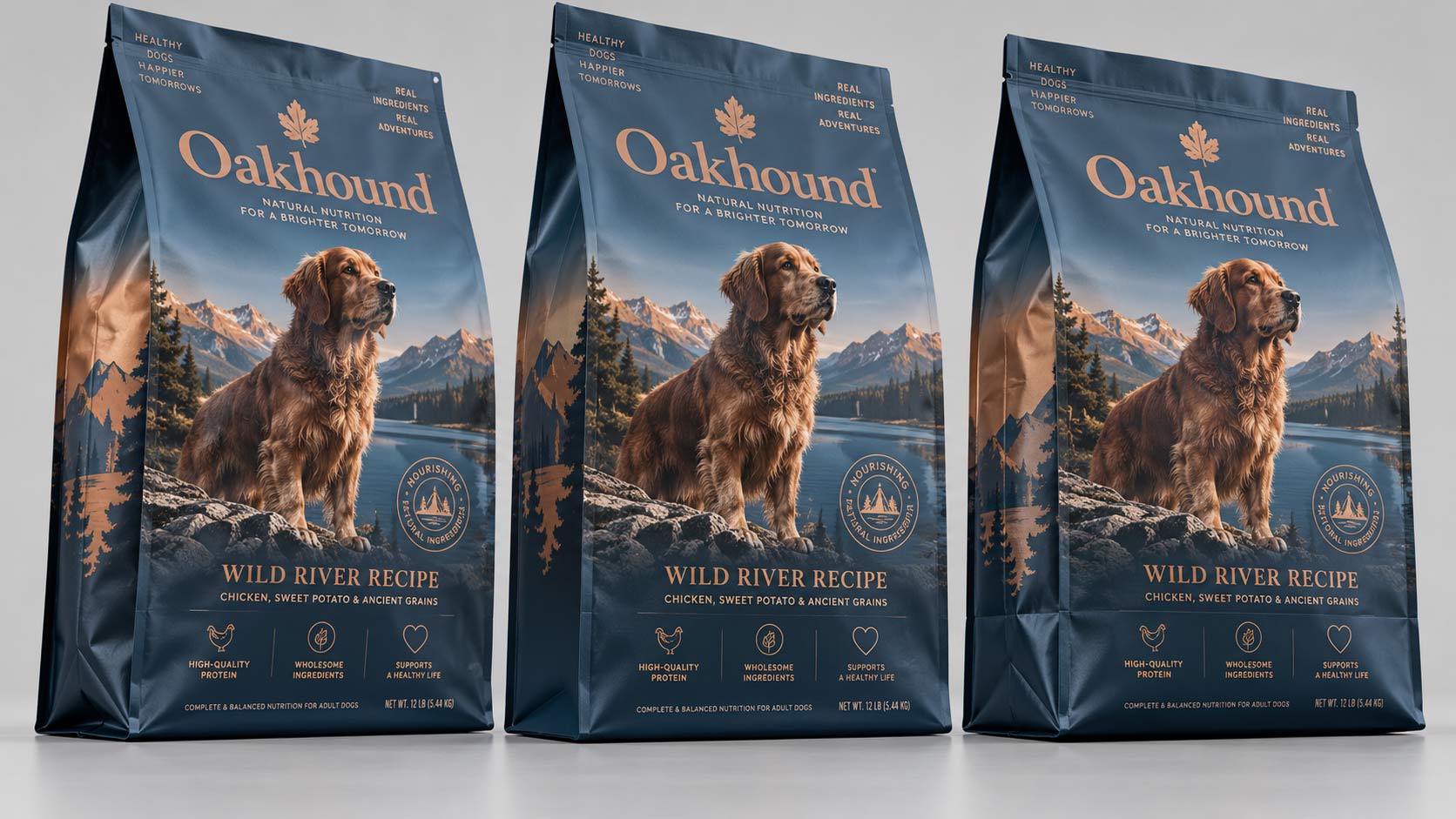
- Bottom construction. A flat bottom or quad seal distributes an impact across a broader, more structured base than a simple gusset does. For large formats this is the single biggest lever.
- The right gauge for the weight. Not maximum thickness, but a structure matched to the fill weight and the drop height it will realistically see.
- Sealant choice. Some sealant layers stay tough under sudden load far better than others.
- Correct sizing. An underfilled bag lets the product build momentum inside, and an overfilled one leaves no room for anything to give. Our post on pet food bag sizes covers why bags are built by volume rather than weight.
- Handles, used properly. A carry handle that encourages lifting rather than dragging means fewer bags land badly.
If you are moving up into larger dry food formats, this is the conversation to have while you are still choosing the build. Our kibble bags page covers the formats, and a full custom pet food bag spec lets you match the base construction to the actual weight.
What to Change on Your Side
Handling costs nothing to fix and usually produces a bigger improvement than respecifying the bag.
Set a height rule and mean it. Most damaging drops in a warehouse happen from a bench, a tailgate, or the top of a stack, all of which are easily avoided by sliding rather than dropping. Keep bags off bare concrete where you can, since a pallet or a mat lengthens the stop and takes most of the force out of it. Watch how the last row comes off a pallet, because that is where people get tired and casual. And if a retailer or distributor keeps reporting bursts that you never see in your own building, the problem is almost certainly happening in their handling, not in your production.
One more worth separating out: a bottom that bursts on impact is a different problem from a seal that was never properly made. If your failures are happening without any drop at all, read why your bag did not fail and the seal never closed instead, because that one is about contamination in the seal area and has a completely different fix.
Wrapping It Up: The Floor Is the Real Test
Every bag is engineered for a load it carries quietly for months. Almost none of them fail doing that. They fail in the one second where all of that weight arrives somewhere at once, and the base takes it.
Specify the bottom construction for the weight you are actually shipping, size the bag so the product is not free to move, and put a little discipline into how full bags get set down. Do that and the occasional dropped bag becomes a non-event rather than a mess on the floor and an awkward phone call to the people who made your packaging.
Ready to Create Packaging Your Pets (and Customers) Will Love?
Let's bring your brand to life.
Get Started Today