
The Leak Is in the Corner. That Is Where Four Layers Meet Two.
A customer finds a little trail of kibble dust under the bag, or a bag that smells stale weeks too early. The seals look fine and there is no hole anywhere. Check the bottom corners. On a gusseted pet food bag, the seal has to close four layers of film right next to two, and that sudden step is the easiest place in the whole bag for a tiny leak path to hide. Here is why it happens and how to design and test it out.
Overview
The complaint is small and annoying. A customer notices a little line of kibble dust on the shelf under the bag, or a bag that smells stale long before the date on it, or ants finding their way to a bag that was never opened. You pull a few bags from the same run. No punctures. No torn seals. Everything looks closed.
Turn one over and look at the bottom corners, where the gusset fold meets the side seal. That is very often where the leak lives, and it is almost never where anyone looks first.
This post explains why the corner of a gusseted bag is the hardest spot to seal, and what to change in the bag design, the sealing and your testing so the corners stay closed.
Why Do Pet Food Bags Leak at the Corners?
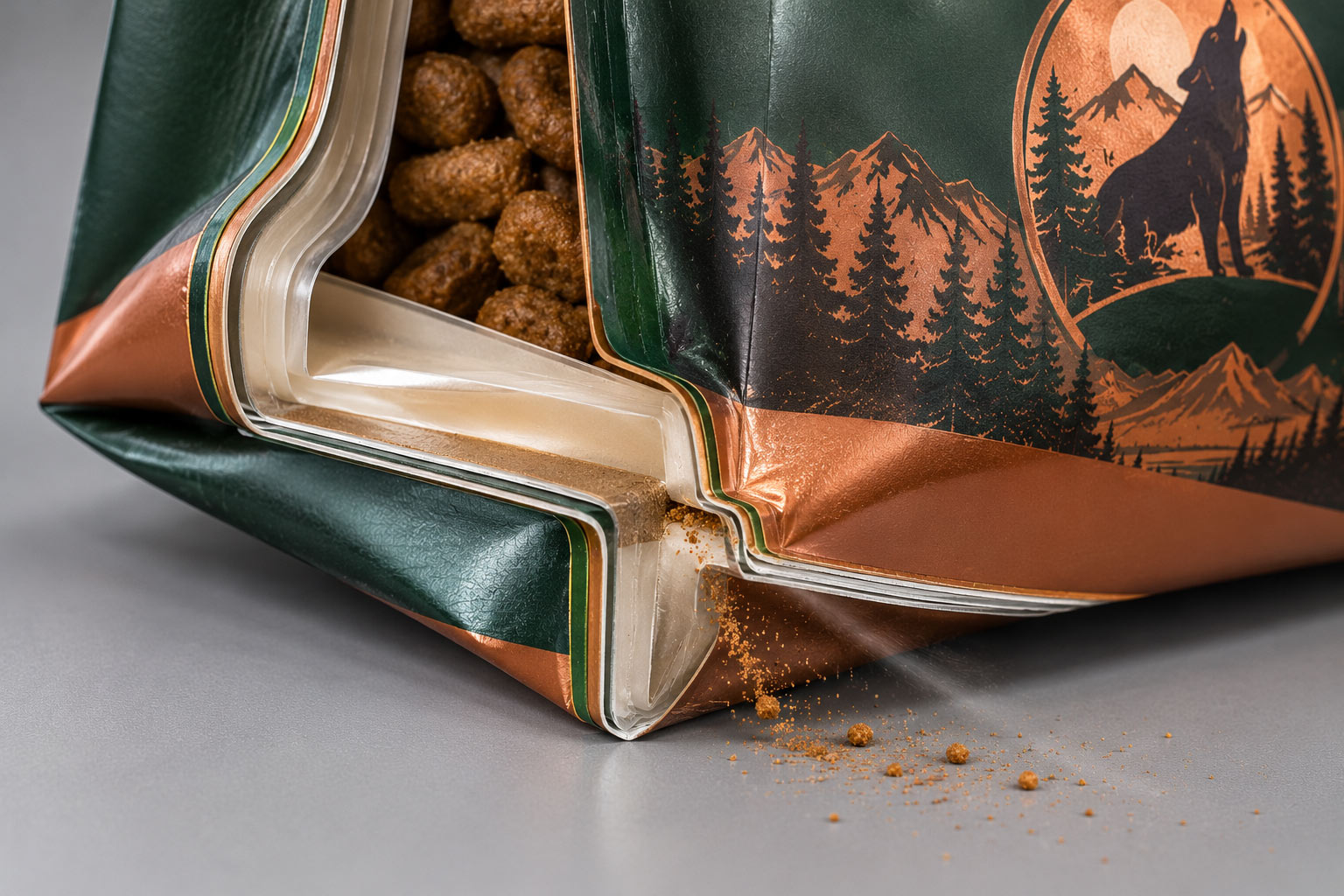
Because the seal suddenly has to close twice as much film in one spot. A gusset is film folded inward to give the bag depth. Where that fold runs into the side seal, the sealing jaws are squeezing four layers of film together. Just beside it, past the edge of the fold, they are squeezing only two.
A heat seal works best when the film it is pressing is even. At the corner, it is not. The jaws meet the thick four-layer section first, and right next to it there is a small step down to the thinner two-layer section. If the pressure, heat or sealant layer cannot fill that step completely, a tiny tunnel is left running through the seal along the edge of the fold. It can be far too small to see and still big enough for air, moisture, aroma and fine dust to pass.
The corner is also where the bag takes the most strain. When a full bag is lifted, set down or stacked, the weight of the kibble pulls on that exact point where the fold meets the seal. A corner that was only just sealed can be opened a little more every time.
Why Does It Look Like Something Else?
Because a corner leak is slow and quiet, so it gets blamed on whatever is easier to see.
- Stale food gets blamed on the recipe, the barrier film or the customer leaving the bag open.
- Dust under the bag gets blamed on a puncture in shipping, even when no hole can be found.
- Pests in an unopened bag get blamed on chewing, when the smell was escaping through the corner the whole time, the problem we covered in pest resistant pet food bags.
- A bag that goes soft or flat gets blamed on air leaving through the zipper.
A corner leak is different from a seal that never bonded at all and from a bag that bursts when dropped. Our posts on seals that never closed and bags that burst on the floor cover those. This one is the bag that looks sealed, passes a glance, and slowly lets the outside in.
How Do You Stop Corner Leaks?
Design the corner so it is easy to seal, set up the sealing so it actually fills the step, and test the corners on purpose.
Choose a bottom construction that suits the weight. The heavier the fill, the more the corners matter. Larger kibble formats often do better in a flat bottom or quad seal bag, which spreads the load over a structured base. Our kibble bags page walks through the styles that suit heavier fills.
Use an angled corner seal on heavy bags. An angled seal across each bottom corner, rather than a square one, relieves the stress where the fold meets the side seal and gives the corner more sealed area to work with. It is a small change to the dieline with a big effect on heavy bags.
Give the film enough sealant to flow. The inside layer of the bag is what melts to make the seal. A sealant layer that is too thin for the job has nothing extra to flow into the step at the corner. Matching the sealant to the bag size and fill weight is part of a good custom pet food bag specification.
Keep the corners clean when filling. Kibble fines and fat on the inside of the film stop any seal from bonding, and the corner is the first place it shows because the seal there is already working hardest.
Do not overfill. A bag packed so full that the gusset is forced wide open puts the corners under strain before the bag ever leaves the plant. Leave sensible headspace, as our post on pet food bag sizes explains.
How Do I Test the Corners Before I Order?
Test the corners specifically. A general look at the seals will miss them.
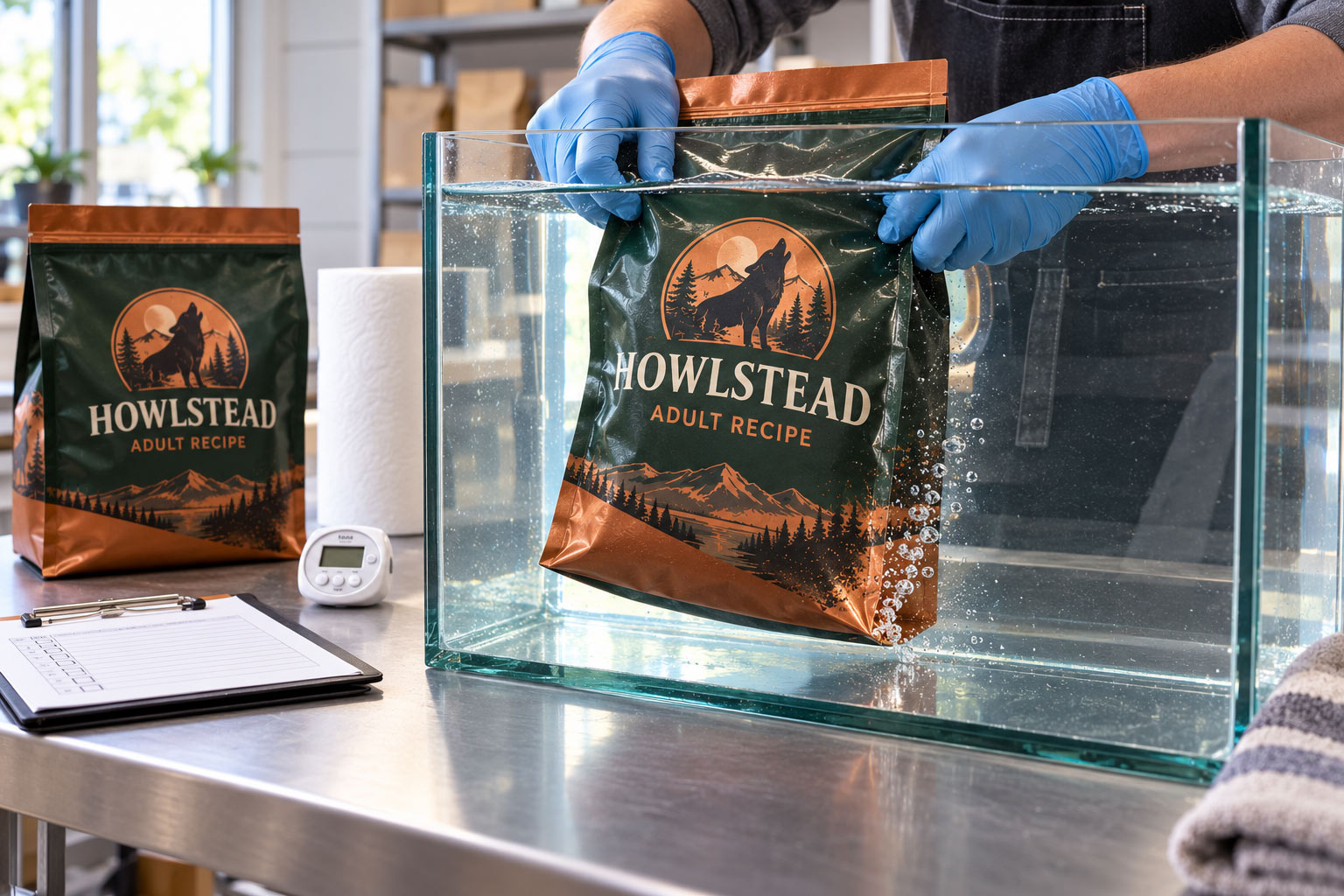
- Do an underwater squeeze test. Seal a filled bag, hold the bottom under water and press gently. A stream of bubbles from a corner shows you exactly where the path is.
- Shake and stack first, then test. Some corners only open after the strain of handling, so test bags that have been through a shake, a few drops and a night under a stacked load.
- Look at a corner against a bright light. Hold a sealed, empty bag up to a lamp in a dark room. A gap in the seal along the fold edge can show as a thin line of light.
- Peel a corner. Pull a corner seal apart on a test bag. A good seal tears the film or stretches it. A seal that peels open cleanly along the fold edge was not fully bonded.
How Savor Brands Handles This
Corners are predictable once you know the bag and the fill, so we plan them before anything is printed.
- We ask what goes in the bag and how much it weighs. Fill weight and product type change the bottom style and corner seal we recommend.
- We talk through bottom construction, including flat bottom and quad seal options for heavier fills.
- We help you test with real product before a full run, and short runs on digital printing make that practical.
- We keep the structure the same on reorders, so a bag that passed your corner tests keeps passing them.
Wrapping It Up: Check the Corners First
When a sealed bag goes stale early, leaves dust behind or draws pests without a single hole in it, turn it over and check the bottom corners. That is where four layers of film meet two, and where the seal is hardest to close and most likely to be pulled open. Choose the right bottom for the weight, angle the corners on heavy bags, specify enough sealant, keep the seal area clean, avoid overfilling, and test the corners on purpose.
Do that and the freshness you designed into the barrier stays in the bag. If you are planning a new kibble bag or chasing a mystery leak, tell us about your bag and your fill and we will help you build corners that hold. For the other way transit stresses a sealed bag, see why bags inflate over a mountain.
Ready to Create Packaging Your Pets (and Customers) Will Love?
Let's bring your brand to life.
Get Started Today